2012年6月13日 星期三

What Does Mookoo Mean?

#2012-0613

Does your name have a special meaning? What are the denotation and the connotation of your name?

Take my name Mookoo for example. When I browsed on the Internet in March, I found an interesting definition of the word MooKoo. See the first picture below, and you'll know that MooKoo can be used to "describe anything at any time anywhere." "This solemn word can mean anything depending on the sentence." The only sample sentence given is: This day was kind of . . . mookoo. Wow! What does it really mean?

My good friend Warren was also interested in knowing more about "Mookoo." He asked me by email: Can you tell me if your name has a special meaning?

Here is my answer:

"Mookoo" is the way my father calls me in the Hakka dialect. It actually sounds like [muk-ku] in IPA, the International Phonetic Alphabet. The first syllable, [muk], is the Hakka sound of the Chinese character 木, which means either tree or wood, one of the five important elements (wood, fire, earth, metal, and water) generally called Wu Xing in Chinese. And the second syllable of my Hakka name, [ku], is a popular "ending" (just like "suffix" in English) which is added to a child's name to mean that the child is male, not female. This is a tradition in the Hakka dialect that I've found in my hometown. For a female kid, they don't use [-ku].

In Hakka, they call an ox "ngiu-ku" and a (female) cow "ngiu-ma." Similarly, a hen is called "ke-ma" but a male chicken can be "ke-ku." So, as you may have guessed, you can call a boy XX-ku or YY-ku, but you should not add the suffix "-ku" to an adult man's name, nor to anyone whom you don't know so well --Anyway, doing that is an intimate way to call a boy or a (young) man in Hakka!

Now you know why I love this pen name of mine -- Mookoo, don't you? (I spell it this way to make it a bit more interesting to myself.)


2012年6月9日 星期六

Little Bee Playing the Organ (小樂手、大好奇)

#2012-0609

你瞧!這就是我們家的「好奇寶寶」----小小音樂家!


去年 (2011) 元月,小蜜蜂很小,躺在床上用腳彈「琴」的那一幕,我們稱之為「足以奏名琴」音樂會----相關照片請參閱《木咕子的家》部落格。如今,他一歲又八個月大,似乎對音樂更加喜好了,尤其對於家中這台 keyboard 的「自動伴奏」特別感興趣,常嚷著「爺爺!爺爺!. . . .」意思是要我開機,讓他「好好地玩它一玩」才肯罷手。


2012年6月3日 星期日

The Rev. Dr. Peyton Craighill Visits St. James'

#2012-0603

Today is the first Sunday after Pentecost, known as "Trinity Sunday." St. James' Episcopal Church in Taichung City, Taiwan, is honored to welcome a very special visitor from the U.S., the Rev. Dr. Peyton Craighill (葛培根牧師), who has graciously agreed to be the celebrant and preach at both the English and Chinese services this morning.

The story of Rev. Peyton is more extensive than I can convey in my simple English. However, I would like to highlight a few points: (1) He is the son of a well-known bishop who previously worked in Jiangxi, Mainland China. (2) He served as the head of Tainan Theological College and Seminary and has a deep love for Taiwan (and China). (3) For several years, he supported us at St. James' as our English chaplain, which is why I have known him for many years.

Rev. Peyton has been one of my best teachers and friends (良師益友). I always missed him when he was far away, so I was thrilled (and truly honored) to have the opportunity to interpret his sermon during the second service at St. James' this morning. See the pictures.

= = = The first 10 pictures below are of the English service = = =


= = = The 5 pictures below are of the Chinese service = = =


2012年5月30日 星期三

Photos of Our Recent Trip, II (小烏來瀑布、天空步道、滿月圓...)

#2012-0530B

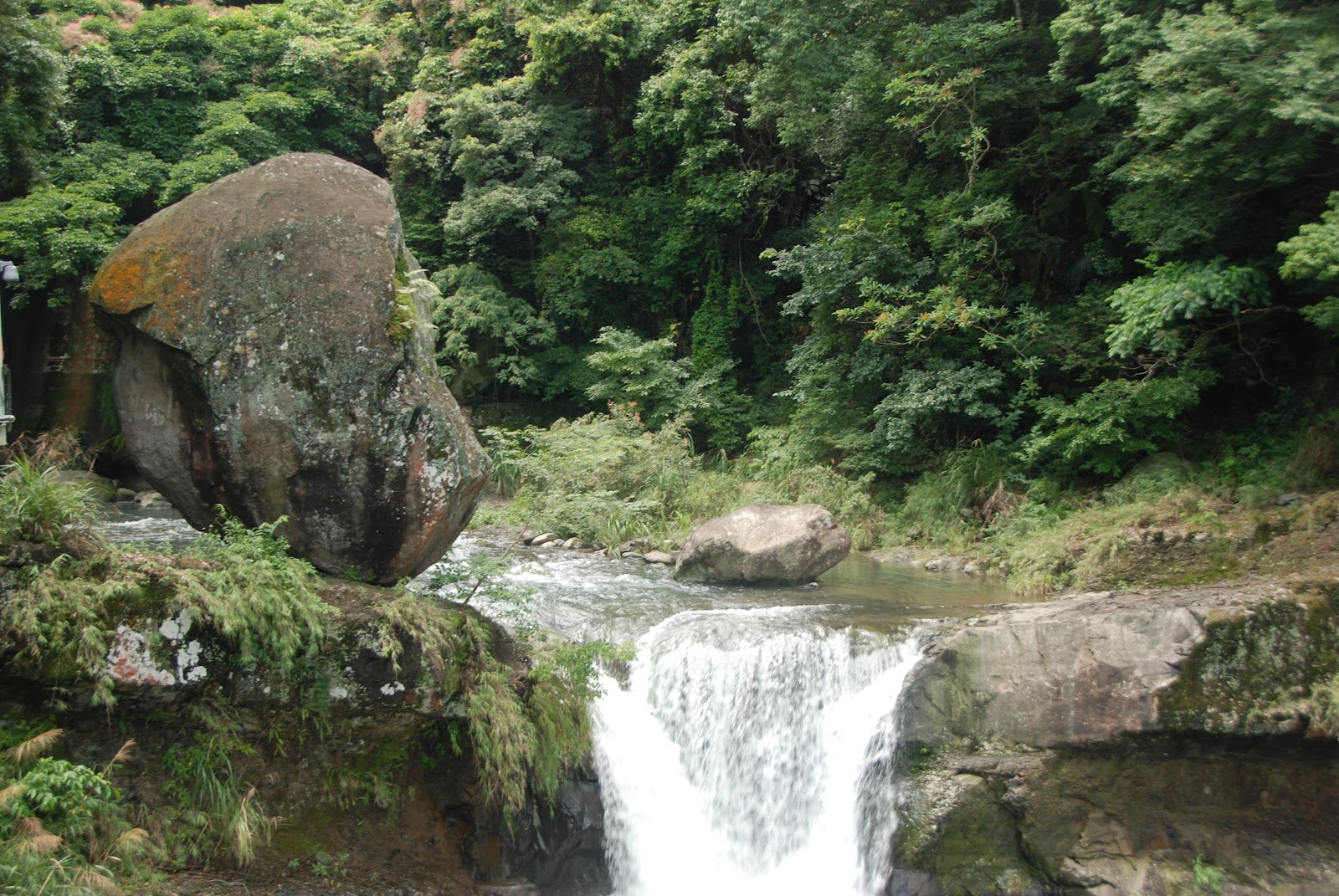
桃園縣「小烏來瀑布、天空步道、滿月圓森林遊樂區」行腳(圖片紀錄)

The following pictures were taken on Tuesday, May 29, 2012 in the mountainous areas of Taoyuan County by my good friend Peter Chan and me Mookoo Liang.

.                              by Peter Chan

.                              by Mookoo Liang

.                              by Mookoo Liang

.                              by Peter Chan

.                              by Mookoo Liang

.                              by Peter Chan

.                              by Mookoo Liang

.                              by Mookoo Liang

.                              by Mookoo Liang

.                              by Mookoo Liang

.                              by Peter Chan

.                              by Peter Chan

.                              by Peter Chan

.                              by Mookoo Liang

.                              by Peter Chan

.                              by Mookoo Liang

.                              by Mookoo Liang

.                              by Mookoo Liang

.                              by Peter Chan

.                              by Mookoo Liang

.                              by Mookoo Liang

.                              by Mookoo Liang

.                              by Mookoo Liang

.                              by Mookoo Liang

.                              by Mookoo Liang

.                              by Mookoo Liang

.                              by Mookoo Liang

.                              by Mookoo Liang

.                              by Mookoo Liang

.                              by Mookoo Liang

.                              by Peter Chan

.                              by Peter Chan