----- Translated by Liang Jin-Lian (梁金連) and published on Sunday, September 17, 1989 in Qun-Sheng Daily (群聲日報), page 11.
昨天,大太陽下,父親和我繞過田邊,為枯萎的玉米築一道籬笆。最近,常有牛群穿過崖上的栗樹林,跑到田裡來。這剛種的玉米那勘蹂躪,嫩芽啃光了,連根都踩扁了。
父親走在田畦間,我們的牧羊犬巴布,趕在前面。突然聽見土鼠尖銳的聲音,從林子邊的崖壁,一竄而下。「快!巴布!逮住牠!」父親叫道。他揀起一截玉米株---還帶著枯乾的鬚根呢,是土鼠挖起來的。土鼠為了吃嫩根上殘留的玉米粒,把株挖起。這乾爽的春季,玉米種在泥土裡,已經發芽吐蕊了。而土鼠喜歡這種玉米;將它一排排挖起,挖起來吃玉米粒。新生的株給毀了,我們就得再種一遍。
瞧!父親正催著巴布追土鼠。他一腳跨過玉米壠,便朝土鼠那邊趕去。我也動身跑向林子邊,巴布已在那兒又跳又叫。大夥兒腳下揚起塵土,背後一陣塵煙。
「是條大黑蛇!」父親叫道:「咬死牠,巴布!咬死牠呀!」
巴布一咬住蛇便連跳帶甩,以免被蛇反咬。這個春天,巴布已咬死二十八條銅斑蛇。牠懂得怎樣咬蛇,絕不匆促行事;牠總是看準時機,順利完成任務。
「黑蛇是無害的,」我說:「放牠一條生路吧!何況牠會咬毒蛇、咬銅斑蛇,捕起野鼠來比貓還行呢!」
顯然,那條蛇並不想跟狗鬥,只想逃開。巴布卻不放過。真搞不懂,那蛇為什麼爬向山邊一堆黑壤土,為什麼從崖上的樹林草叢中爬了來。當牠昂起漂亮的頭,回應巴布的一躍時,我發現---「不是公蛇啊!」我說:「是條母蛇。你看,她喉間有條白斑紋。」
「蛇與我為敵,」父親搶著說:「我討厭蛇。咬死牠,巴布!去,把牠咬死,別逗著牠玩!」
巴布很聽父親的話。我卻不喜歡看牠咬這條蛇的喉部。這蛇懸在陽光下,好美。巴布竟攫取她喉部的白斑紋,把長長的蛇身當牛鞭,在風裡甩得劈啪響。只迎風一甩,血就從纖細捲曲的喉部迸出來。好像有什麼東西,像小彈丸般,打中我的腳。巴布拋下了蛇。我查看是什麼打中我的腳。是蛇卵。巴布把蛇卵從蛇肚中甩出來了。原來這條蛇正要到沙堆產卵,此地陽光暖和,可比母雞孵蛋。
巴布叼起地上的蛇,紅色的血,流到灰黑的土墩。蛇身還在痛苦扭動,宛如擱在火上的綠色莠草。巴布毫不留情,又甩了她好多下,把她軟弱的身子迎風而甩。現在,在風裡她軟得像條鞋帶。巴布將她拋回地面。她顫得像微風中一根葉片,然後,便一動也不動地躺在那裡。血染紅了週遭的土壤。
「來看蛇卵吧!」父親說。我們算了一算,共有三十七顆卵。我揀起一顆來,放在手心。就在一分鐘前,裡頭還有生命,此刻卻成了無效卵,孵不出來的。即使日頭娘也無法促其生啊!我手中的卵,幾乎如鵪鶉蛋一般大,殼很薄,又很韌,看起來裡頭全是水。
「嗯!巴布!這條蛇為何不戰,你現在該懂了吧!」我說:「這就是生物界。弱者吞食強者,連人也是。狗咬蛇,蛇吃鳥,鳥啄蝴蝶。人則征服一切。人,還為了好玩而殺戮呢!」
巴布喘著氣。回家時,牠走在我們前面,吐著舌頭,累了。牠裹著一身亂蓬蓬的毛皮,當然熱。牠的舌尖,幾乎碰到乾燥的泥土,以及本身滴落的白色口沫。我們走向房子,父親默然無言,我也不發一語。我還在想那條死去的蛇。太陽快下到栗樹林後了,有隻雲雀唱起歌來。這時候唱歌似乎太晚了。紅色的晚霞,漂浮於牧羊崗的松林上。父親站在小徑旁。他的黑髮被風吹動。他的臉在風中泛紅。他的兩眼望向天邊的落日。
「我的父親竟討厭蛇!」我想。
我想到女人得知有喜時的衝動。想到她們為了救孩子,會如何奮戰。然後,我想到那條蛇。心想,我有這些念頭是多麼可笑!
今晨,父親和我起得很早。他常說一個人必須早起做工。我們帶了打洞杵、斧頭、小鏟、和鶴嘴鋤,出門上工,巴布這回沒跟著。
玉米株上還有露水。父親扛著打洞杵,走在後面;我走在前面。風吹著。好棒的晨風,只消吸它幾口,便覺得全身帶勁,好像能將整座山舉起,甚至翻轉過來似的。
我走出昨天下午來過的玉米畦,往前看,突然發現一堆東西。他在動呢!就像一條大黑繩,纏著絞盤在動。「小心!」我對父親說:「有條雄黑蛇。」他上前一步,站在我身旁,眼睛睜好大。
「真有這麼回事啊!」他說。
「你現在已看到雄黑蛇了,」我說:「仔細瞧瞧吧!他躺在死去的伴侶旁邊。他已經找到她了。也許,他昨天就一直跟在她後面。」
那公蛇已跟隨她到最後一刻。在夜裡,滿天星斗底下,當綠雲顫動、月光灑落之際,他來了。他發現愛侶已死。他捲曲在她身旁,而她已身亡。
當我們繞過死蛇時,那條雄黑蛇昂起頭,緊盯著我們。他勢必抵抗我們、抵抗巴布,直到戰死為止。「拿一根棒子來!」父親說道:「把他扔到山後去,讓巴布找不到。你見過比這還要美的事麼?我聽說他們會這樣,但這是我頭一回看到。」我取來一根棒子,把他撥過岸,扔到崖上那沾滿露水的草叢裡。 <#>
**** 譯註:原作者捷西‧斯圖亞特 (Jesse Stuart) 生於一九O七年。其父親來自肯塔基州東部,為一介文盲佃農。捷西幼時受正規教育不多,後來設法就讀高中、大學,才發現有寫作天賦。他以作家為業,並在南方學校擔任教職。除了短篇小說,他也寫詩,寫長篇,寫自傳(一九五八)及父親的傳記(一九六O)。捷西酷愛大自然,又欣賞個體特性,是受其父親的影響。本篇「愛」即是一例。
2010年6月9日 星期三
2010年6月8日 星期二
英文時式 (tense) 及語態 (voice) 的葵花寶典
你瞧!英文時式 (tense) 及語態 (voice) 的葵花寶典,SO VERY EASY!
主動語態 (active voice) 共有 12 種時式,基本例句如下:
以動詞 write 造出上述 12 種時式之例句,供你參考:
同樣,以動詞 write 造出上述 8 種時式之例句,供你參考、比較:
----- Simplified by Jerry Liang
(註:可點選圖片、放大之後,再讀。)
主動語態 (active voice) 共有 12 種時式,基本例句如下:
以動詞 write 造出上述 12 種時式之例句,供你參考:
被動語態 (passive voice) 只有 8 種時式,基本例句如下:
同樣,以動詞 write 造出上述 8 種時式之例句,供你參考、比較:
(附註:可點選圖片、放大之後,再讀。)
2010年6月7日 星期一
寫於睡前
----- by 金浪 (Jin Lang, one of my used pseudonyms) and published on Tou-Shang Qingnian (投商青年) on May 15, 1987.
時候到了,怕繳白卷的
信筆塗敷垂危的苦思
催索的鐘聲逼近、逼近、逼近......
逼跑了所有未誕生的色彩
我的生命啊!拿什麼
向誰去交代?
已經老得可以,卻還
細數著春天的花 花中的夢
而多如繁星的理想,到頭來
竟一株芽也沒萌過
主宰呀!為什麼
生命這樣脆弱?
或許還喟嘆得太早
或許還能悄悄地呼吸
黃昏逐漸失色 必然的;
星光月色稀薄 也不用愁
只要再入夢(寫吧!寫吧!
寫罷,再寫)這一夜
難道不是最年輕、漂亮的一頁?
----- 1987.5.15 刊於 投商青年 第 24 期
時候到了,怕繳白卷的
信筆塗敷垂危的苦思
催索的鐘聲逼近、逼近、逼近......
逼跑了所有未誕生的色彩
我的生命啊!拿什麼
向誰去交代?
已經老得可以,卻還
細數著春天的花 花中的夢
而多如繁星的理想,到頭來
竟一株芽也沒萌過
主宰呀!為什麼
生命這樣脆弱?
或許還喟嘆得太早
或許還能悄悄地呼吸
黃昏逐漸失色 必然的;
星光月色稀薄 也不用愁
只要再入夢(寫吧!寫吧!
寫罷,再寫)這一夜
難道不是最年輕、漂亮的一頁?
----- 1987.5.15 刊於 投商青年 第 24 期
2010年6月6日 星期日
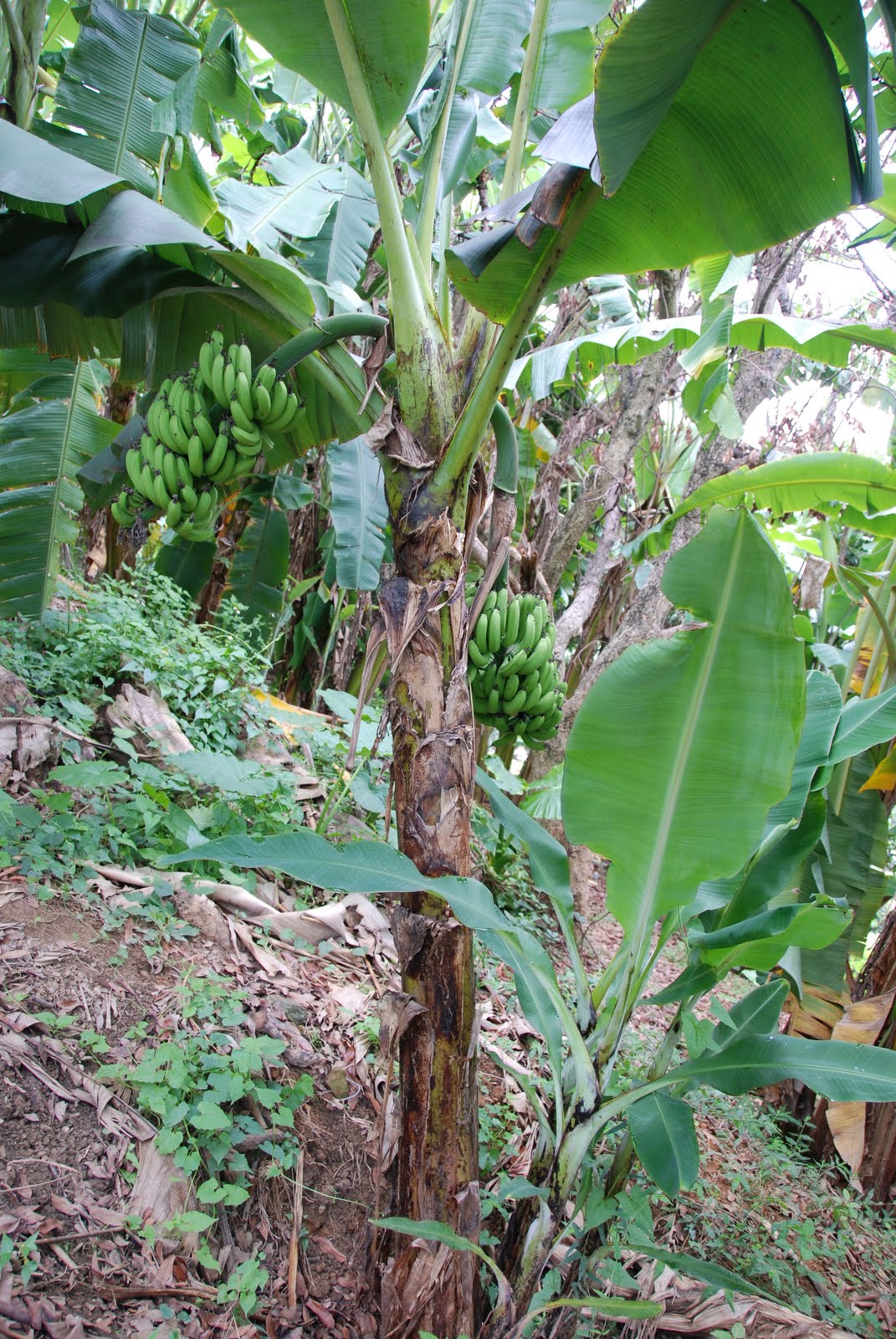
新發現(有幸親眼目睹的):共 2 組
圖片編號:001
But how much do you know about bananas? Do you know every single tree

圖片編號:002
Yesterday morning when I was hiking in the nearby mountains,
I saw something that I had never seen before.
我昨天爬山的時候,竟然看見了我
一輩子從未見過的「稀奇」。
Yes, I had been in my 50's and yet this was my first time
to see such an incredible "wonder" (or "miracle").
一點也不假,親眼目睹這樣的「奇異現象」
對年過半百的我而言,還是頭一遭呢!
But how much do you know about bananas? Do you know every single tree
of banana can produce only one "string" (or "series") of fruits?
其實,每一棵香蕉樹(從小到老)只會結出一串香蕉;
總是「果實熟,果樹衰」--- 這點你可知道?
圖片編號:002
Look! This tree was having two strings of bananas, so unusually!
而這棵香蕉樹竟然結了「雙胞胎」--- 有兩串果實!
So then, I quickly returned home to fetch my camera and meanwhile
I invited my wife to come to this "unique" banana tree --- in order
that I could add something very special to my Mookoo's Home.
於是,我忍不住立即回家拿相機來,也邀老婆一起來,
把這株長了兩串香蕉的香蕉樹給拍攝下來
存入我的「木咕子之家」當作紀念。
於是,我忍不住立即回家拿相機來,也邀老婆一起來,
把這株長了兩串香蕉的香蕉樹給拍攝下來
存入我的「木咕子之家」當作紀念。
2010年6月5日 星期六
有感
---- by 浪子 (Lang-Zi, one of my previous pseudonyms) and published in 綠園 (Green Garden) on June 21, 1975.
過去的,是夢;未來的,是憧憬。而這一季----一九七五年濃濃的夏天,我心亂如麻,千百聲惶恐與無奈噎在喉間。
啊!在漂泊中度過漫長的五年,在靜默中踩過整個綠園,如今的我應不再是稚童一個----僅只迷戀於風的聲息,花的顏色;或者滿足於雪的聯想,月的描摹。
抬頭望見斜坡上高大蓊鬱的鳳凰木,那一簇簇灼灼逼人的紅花,豈非一團團燃燒著的戰火?
在那遙遠的地方,存在著太多太多被埋沒的,尚未完篇的血淚故事。只因我身在綠園中,安逸的生活麻木了心靈,遂淡忘一切,除了這所謂的「夢」與「憧憬」。
這所謂的夢----一串串由「卑微」所織成的,無法描繪且不值得彈唱的回憶,竟然如此強韌地(好像千絲萬縷)纏著我。例如:那條名叫「水長流」的小溪,教我深深懷念;那個被溪水載走的童年,教我永難忘懷;那位伴我度過童年歡樂時光,如今卻遠在他鄉異縣工作的妹妹,教我.........。
這所謂的憧憬----曾經有過的許多企盼:企盼身為豐收的耕人,企盼心靈動如音樂靜如畫,企盼日後真的成為「科學的探求者,哲理的挖鑿者」......諸如此類的念頭雖然強烈,卻像曇花一現;雖然頻繁,卻漂泊不定。令人難以肯定它是夢想?是理想?還是幻想?
直到一九七五年夏季的某一個午後,(鳳凰花盛開)我仍舊浸沉在夢與憧憬中。然而,我已經對所夢的夢倍覺無奈,對所憧憬的憧憬益感惶恐了。報紙上斗大的標題寫著:「在非軍事區內挖掘地道,北韓顯圖南侵」,好不刺眼!......廣場上傳來鑼鼓喧天和啦啦隊為競賽者加油呼喝的聲音。......報紙的一角刊出越南難民挨餓害病的駭人鏡頭。......各式各樣的運動衫正劇烈地跳動著,在綠園的天空下,草坪上。......
天哪!我突然發現一件可怕的事實:這些年來,我一直是一位「觀戰者」。沒有穿戴盔甲上戰場的紀錄,也沒有參與各項競賽的決心。我,到底在逃避些什麼?為什麼老是當一位只會回憶過去、計畫將來,卻不懂得把握現在的「觀戰者」呢? <#>
過去的,是夢;未來的,是憧憬。而這一季----一九七五年濃濃的夏天,我心亂如麻,千百聲惶恐與無奈噎在喉間。
啊!在漂泊中度過漫長的五年,在靜默中踩過整個綠園,如今的我應不再是稚童一個----僅只迷戀於風的聲息,花的顏色;或者滿足於雪的聯想,月的描摹。
抬頭望見斜坡上高大蓊鬱的鳳凰木,那一簇簇灼灼逼人的紅花,豈非一團團燃燒著的戰火?
在那遙遠的地方,存在著太多太多被埋沒的,尚未完篇的血淚故事。只因我身在綠園中,安逸的生活麻木了心靈,遂淡忘一切,除了這所謂的「夢」與「憧憬」。
這所謂的夢----一串串由「卑微」所織成的,無法描繪且不值得彈唱的回憶,竟然如此強韌地(好像千絲萬縷)纏著我。例如:那條名叫「水長流」的小溪,教我深深懷念;那個被溪水載走的童年,教我永難忘懷;那位伴我度過童年歡樂時光,如今卻遠在他鄉異縣工作的妹妹,教我.........。
這所謂的憧憬----曾經有過的許多企盼:企盼身為豐收的耕人,企盼心靈動如音樂靜如畫,企盼日後真的成為「科學的探求者,哲理的挖鑿者」......諸如此類的念頭雖然強烈,卻像曇花一現;雖然頻繁,卻漂泊不定。令人難以肯定它是夢想?是理想?還是幻想?
直到一九七五年夏季的某一個午後,(鳳凰花盛開)我仍舊浸沉在夢與憧憬中。然而,我已經對所夢的夢倍覺無奈,對所憧憬的憧憬益感惶恐了。報紙上斗大的標題寫著:「在非軍事區內挖掘地道,北韓顯圖南侵」,好不刺眼!......廣場上傳來鑼鼓喧天和啦啦隊為競賽者加油呼喝的聲音。......報紙的一角刊出越南難民挨餓害病的駭人鏡頭。......各式各樣的運動衫正劇烈地跳動著,在綠園的天空下,草坪上。......
天哪!我突然發現一件可怕的事實:這些年來,我一直是一位「觀戰者」。沒有穿戴盔甲上戰場的紀錄,也沒有參與各項競賽的決心。我,到底在逃避些什麼?為什麼老是當一位只會回憶過去、計畫將來,卻不懂得把握現在的「觀戰者」呢? <#>
2010年6月4日 星期五
Puppy Love
#2010-0604
"Mommy, my classmate Wang Kun has a puppy." He raised the issue the other evening, "A white dog, you know, so small and cute! Wang Kun lets me play with it sometimes, but I really want to have one."
"There, Tony, you are a good boy. You know what papa has said. He has told you that . . ."
"But why did Wang Kun's papa buy him a puppy? Not only Wang Kun, but Zhang Xiulan also has a pet dog. And Lin Yong has one too." Tony was angry. The nine-year-old boy seemed to be less docile than before.
"Well, the situations might be different," said my wife with patience. "Papa is right. We are living in such a neighborhood. If we had a dog . . . Well, I don’t know, maybe you should go and discuss the problem with your father tonight."
My wife Jean hesitated at times, especially when our son asked for something to play with. She said to me in private that we should give our little boy a few more toys, because he was our only child. As you can imagine, we had bought him lots of toys: colorful Lego blocks, stylish model cars, model ships, model planes, and the fancy robots Space Fighter and Wudi Tiejin'gang.
Once we bought him a set of Barbie dolls. We were pleased to see our "naughty boy" play with the girl dolls. When he dressed them, he acted as if he were taking care of real babies. Jean and I smiled at each other. We agreed that our boy would become a gentle, kind-hearted man someday.
But our boy played with the Barbie dolls no more. He didn't even care about his other expensive toys. He wanted a pet dog now.
This caused a lot of trouble for his mother, my wife. Unlike me, Jean was very afraid of dogs. She thought all kinds of dogs were wild animals and that all wild animals would possibly bite you when irritated. She once said to me, "You don't know when it would be irritated, do you?"
"Oh, that's not very true." I shared with her my pleasant experience of raising dogs. And I added, "Once a dog becomes a member of this family, it will remain friendly and faithful to you and me, not to mention our boy."
Our little boy was only nine. And a pre-teenage boy is more or less like a puppy himself. Just as the English word "kid" (originally referring to a young goat) is used to mean a child, many Chinese parents refer to their sons as xiao quan, literally meaning "small dog."
So I was sure that if we had given our little Tony a puppy, he and the animal would have become the best companions in the world. And he might have shown it to Wang Kun, to Zhang Xiulan, to Lin Yong, and to other classmates that possessed the similar pets.
But I refused to allow him a pet dog. A pet dog would certainly bring great fun to my little boy, and I myself had liked dogs very much when I was young; however, I was strongly against the idea of having such an animal in our present home.
I rejected Tony's suggestion for three reasons. First, as we were living in a quiet neighborhood, a barking animal would make too much noise. Second, young children living near us often came and played in front of our house. "If we let our dog run loose," I asked my son on purpose, "can we be sure that it won't hurt any of them? Do we have to confine our puppy by tying it up? Or by putting it in the cage most of the time?"
The point was that nobody would be able to keep an eye on our pet in the daytime. Except for weekends and holidays, Tony had to go to school and his parents to work.
So the third reason was the most important: our busy lifestyle made it impossible for us to take good care of a dog. "Who will take responsibility for feeding and cleaning our dog?" I seriously stated, "Feeding a dog may be easy, washing it could be fun, but cleaning the dog cage every morning and every evening will be a heavy burden --- an extremely heavy burden!"
That night the members of my family had another long talk about the possibility (or difficulty) of having a pet dog. In the end, when it was almost midnight, my solemn explanation seemed to have convinced (or frightened) our "innocent boy." He stood up from the living-room chair, looking at me and at his mother for a few moments. Then, he walked slowly toward his bedroom, in silence.
======== ♫ ========
In the following week, I was busy with my job and Tony didn't bother me with his demand. That is, I didn't hear his complaint. I was pleased to have a "sensible child" --- who is, by my definition, very understanding and considerate toward his parents.
When the weekend came, I took Jean and Tony back to Shui Changliu, my home village, where my parents lived. Jean, who formerly had hated to stay in a remote place for the night, was now much more interested in that small village in the mountains. And it goes without saying that Tony liked to re-visit the place very much. He had lived there with his grandparents until he was three years old.
On the way to Shui Changliu, I drove fast but with care while Jean and Tony chatted aimlessly in high spirits. The beautiful scenes on both sides of the winding road in the mountains attracted our common attention, though.
We passed by many different kinds of trees, taller and shorter ones, and we saw birds in various colors flying here and there. Jean and Tony began to talk about plants, birds, and animals.
"What would you like to be, mommy?" Tony asked Jean. "A bird or a four-legged animal?"
"Well, I . . . I'd rather be a human being!" she replied.
"Oh, no! Please just choose from the two," he insisted. "If there were only two options, which would you pick to be?"
"How about you?" I interrupted, "What do YOU want to be, Tony? Do you like to be a monkey? . . . Ha, ha, ha, you are either a boy monkey or a monkey boy!"
Actually we were chatting in Mandarin mixed with the Taiwanese dialect. But I said "boy monkey" and "monkey boy" in English. I guessed our son couldn't tell the difference between the two phrases yet, though he had already learned the English words "boy" and "monkey."
But Tony protested, "No, no, no. I am neither! If I were a kao-gin-a ('monkey child' in Taiwanese), both of you would be kao-tua-lang (monkey adults)!"
Jean and I burst into laughter. We often teased our little child this way. Yet quite often we were made laugh by the "bright boy" fighting back.
I thought of those years when Tony was attending a kindergarten near our house. Tony was three years old when Jean and I took him out of the mountain village Shui Changliu. Before that, Jean had worked full-time in her hometown, near the sea; and I had gone to National Taiwan Normal University, in Taipei, for further study. That's why I had asked my parents to help look after my child.
When looking after Tony ourselves, Jean and I tried to teach him many things. This was how I taught him the Arabic numerals for the first time:
I pointed at 1, 2, 3, 4 with my finger and wanted him to repeat after me, "yi, er, san, si." He just stared at me without saying anything. I instructed him again. He kept silent, staring at me in the same way. I tried a third and a fourth time and he still gave no response. All of a sudden, I became very angry and upset, thinking that I had got a "terribly stupid child."
Then, something interesting happened. Returning from the kindergarten one afternoon, Tony told us he had been taught the lesson about "yachi baojian" (tooth-caring). He asked with a mischievous grin, "Why is the tooth related to the sword? Can the tooth be used to make a sword?" What a funny boy! He must have misunderstood the term baojian (meaning "health care") for another baojian (meaning "sword").
Our little boy was creative in language. As soon as he learned the Chinese characters 人 (ren for "man, person, or human being"), 大 (da for "big, large, huge, or great"), 小 (xiao for "small, tiny"), and 中 (zhong for "middle, center"), he started to regard me as 大人, himself as 小人 and his mother as 中人.
Yes, as an adult, I could be called 大人 in Chinese. But "children" should be 小孩 (xiao-hai) instead of 小人 (xiao-ren), because the latter suggests "a villain" or "a mean person."
Every time Jean and I heard Tony call himself 小人, we would burst out laughing. However, I thought he was very smart to call his mother 中人 --- He might have defined 中人 as "a person taller (bigger) than 小人 and shorter (smaller) than 大人." In actual fact, 中人 (zhong-ren) means "middleman, mediator, or intermediary" in the Chinese language.
Whenever Tony found it hard to ask me for something, he would ask his mother for help. And his mother, or my wife, usually acted as an intermediary. For instance, during the previous weeks, he had failed to persuade me into buying him a puppy. He turned to "plead" with Jean, even though she was afraid of dogs!
As Jean, Tony, and I were in the same car heading for Shui Changliu, I couldn't help thinking about the first few years after our little boy came to us from my parents' farm.
He had been growing well. Now, at the age of nine, he remained our only xiao quan (sometimes as obedient as a puppy) and our unique kao-gin-a (sometimes as mischievous as a monkey).
I slowed the car and began to teach our son a Taiwanese tongue twister. The tongue twister went like this: Kao pua-luo kao, kao t’e kao-a lai kao kao. Si kao kao kao? Ya si kao kao kao? [That means: A dog fell into the ditch and a monkey came with a hook. Is the monkey hooking the dog? Or is the dog hooking the monkey?]
You know, in the Taiwanese dialect, "dog" is pronounced kao with a falling tone while "monkey" is kao with a falling-rising tone. The noun "ditch" is kao with a high level tone, sounding just like the verb "to hook."
Jean repeated the tongue twister so Tony could say it correctly and quickly. The mother and son were very excited all the way, and so was I.
======== ♫♪ ========
One night, Jean and I talked about our son's needs again.
"I hate dogs myself," she admitted. "But, as you can see, our son likes the animal so much. How about giving him a chance? He's promised to take good care of the pet."
"Well, you know what the problems will be, don't you?" I repeated my three reasons for not allowing him a pet dog. But we both felt that our "clever and well-behaved boy" deserved a good pet, anyway.
I suggested we buy him a fish. Setting up an aquarium in the living room would cost us too much money, and we had never learned how to deal with those slippery water creatures as pets. Therefore, Jean and I decided to simply buy a dou-yu for our son.
A dou-yu is a "fighting fish." Like a gamecock, it is a particular kind of fish that looks cute but is ready to fight all the time. You'd better separate two dou-yu in two different containers; otherwise, they are likely to fight until either is killed.
However, our son did not like the single dou-yu we bought him. The brave fish, which we had put in a beautiful wine glass, died for no reason within a week.
Several days later, Jean came home with a birdcage. "Oh, five white birds!" cried Tony. He and I were curious about the birds. Jean said they were called bai-wen-niao. The birds, together with the birdcage, were given to us by Jean's co-worker Miss Luo, who had kept them as pets.
At first, we placed the birdcage at the living room. Tony was attracted to these new pets. He spent a lot of time watching them. The five birds were very much alike in size, shape and color. But, to my surprise, Tony was able to distinguish them.
I suddenly thought of my own childhood. Unlike Tony, I had brothers and sisters. Together with our parents, we lived in a solitary farmhouse in the mountains. We had a cow, two dogs, and three or four pigs; we also raised chickens, ducks, and geese.
It was pretty easy for us to distinguish those farmyard birds. We would name each of the fowls, divide them into groups, and then claim the "ownership" of one of the groups. That means, when "your bird" or "my bird" was killed for food, the feathers plucked from it belonged to you or me; by selling the plucked feathers, the "owner" could get some "pocket money."
Now Tony had much more "pocket money" than I used to have. He even possessed some very expensive toys. Was he not lucky enough to have these white birds, bai-wen-niao?
For the first two weeks, we paid close attention to the five pet birds. We moved the birdcage to the front yard in the morning, and took it back into the living room in the evening. Then we became less and less careful. Finally, about one month later, the birdcage was hung on the wall of our back balcony. We did not approach the birds except for feeding them.
Hanging on the balcony day and night, the birdcage was not taken indoors any longer. One night, the weather became unusually cold. One of the five birds was found dead the next morning. Two days later, the weather being okay, two more were killed and another one was badly injured.
Wondering if there had been a killer cat or something, I asked Jean and Tony, "Have you heard anything strange in the night?"
"No," they replied. "Recently we haven’t heard any meow at night --- What if the killer came in the day?"
The injured bird died very soon. We felt sorry for all the dead birds, and also for the last one that was alive. "It is a lonely bird!" said Tony. "We should have taken better care of its brothers and sisters." However, to our great disappointment, this last bai-wen-niao disappeared the next day.
Where was the missing bird? The door of the cage shut well. Checking the wooden birdcage carefully, I found that our last pet bird died on the wall of the cage. The dead body stuck in the corner near the cage-roof. Some nails were so long that their pointed ends came out from inside the cage; unfortunately, the victim had rushed into one of the long nails.
======= ♫♫ =======
Were we destined never to have any pet again? Tony was now more and more interested in dogs. He wished that he had got a lovely puppy.
One Saturday, I took Tony and Jean back to Dajia, Jean's hometown, where her parents lived. Now our son really wanted a puppy, Jean and I thought it necessary to take his "puppy love" more seriously. Jean learned from her parents that a distant relative of ours had just got some baby dogs. And I promised to get our xiao quan a nice doggy, at last.
Due to our xiao quan, Jean changed her mind about dogs though she had never gotten used to getting close to such animals before. On the other hand, I made up my mind to help look after the future pet dog. But Tony was the happiest person in the car when we were all heading for Dajia.
That afternoon, Jean and I enjoyed ourselves at home drinking tea and chatting with my parents-in-law while Tony followed his cousins to the relative's house to pick a puppy. In the evening, the children did not bring any puppy home, saying that the baby dogs were too small to be independent.
"The puppies still need their mother's milk!" said the children (Jean's nephews and nieces).
"What color are the puppies?" I asked Tony, "Have you found your favorite one?"
"Yes, I like the black one best. The other puppies are either yellowish brown or spotted brown; I mean, brown spotted with white."
"Is the black puppy male or female?" I asked.
"Oh, I'm not sure," replied Tony.
I told Tony to remember this: The male dog would be much better than the female. Jean laughed at me, asking whether I was a "male chauvinist."
On the way home from Dajia, we chatted cheerfully in the car, and our conversation was all related to the pet dog. We talked and talked and talked. But, first of all, we felt we needed a good name for our puppy:
"How about calling it Lai-Fu?" "No!"
Although Lai-Fu sounds like either 來福 (Here comes good luck) or 來富 (Here comes wealth) in Mandarin, we thought we could possibly find a better name.
"How about Kulo?" "No!"
Many black dogs had been given such a name because "kulo" means "black" in Japanese. We didn't really like a name that was so common. What's worse, "kulo" sounds like the Chinese phrase "ku le," which means "(somebody) is crying."
"How about Xiao Hei?" "Come on, be a little creative!"
Such names as Xiao Hei, Xiao Huang, and Xiao Bai are based on colors: denoting black, yellow, and white respectively. I said, "It's a risky thing to call your dog Little Bai or Little Huang. If a Mr. Bai or Miss Huang comes to visit while your dog is angrily barking at him or her, what can you do? Can you yell at your dog by using its name?" Obviously, it is impolite to yell out "Get away, Little Black" when an honorable uncle named Mr. Black comes to visit.
After a long discussion, we almost reached agreement on the name 黑皮 (Hei-Pi, literally meaning "black skin"). Suddenly Tony shouted out, "Happy!" And Jean said happily, "Oh, yes, let's call him Happy!" I agreed with them, hoping that the little animal would bring this family a lot of happiness.
I thought of my childhood again. Living at a solitary house in the mountains, we did need one or two dogs to help us. One day, I heard our dog Vu-Lyung barking loudly in the nearby fields.
[By the way, Vu-Lyung is the Hakka pronunciation of 烏龍, literally meaning "black dragon." This name is pronounced as Wu-Long in Mandarin, and as Oo-Liong in Taiwanese. My "mother tongue" is Taiwanese, but my father actually speaks Hakka more often. It's a pity that neither my wife nor my son understands the Hakka dialect, which I regard as my "father tongue"!]
Rushing up and down the terraced fields at breakneck speed, our dog Vu-Lyung seemed to have found something unusual. Was he chasing a rat or something? My father and my cousins, who happened to be working nearby, heard the barks and joined in hunting from all sides. Before long, they saw Vu-Lyung carrying the game in his mouth. It was not an ugly rat, but a big brown hare!
How exciting it was! The rare game was cooked immediately. When eating the delicious food, we shared some with our real hero, Vu-Lyung.
Now, two weeks after Tony saw Happy for the first time, I took him and his mother back to Dajia again. My father-in-law went together with Tony on a bicycle to fetch the puppy. When they came back, I was surprised that they brought a brown puppy instead of the black one.
"Grandpa says this puppy looks stronger than any others," explained Tony.
"Well, grandpa is right. It looks healthy, and pretty as well." Jean said.
I asked if we should change the dog's name. This brown dog definitely did not have hei pi (black skin). But Jean and Tony said they would rather call it Happy.
We came home from Dajia next morning, together with Happy, very happily.
Happy was a pretty dog indeed. However, it was as timid as a mouse. When it was taken out of the carton (used as its movable bed), it quickly hid itself under the living-room chairs. It trembled seeing so many strangers around. All of us (including our next-door neighbors) were interested in such a newcomer. But Tony was obviously the first one that made friends with it.
Tony started to "walk the dog"! He led the lovely puppy out of our front yard, with the leash in his hand. More and more people saw it in this neighborhood. "What a pretty dog!" they said, with a smile. But, seeing other dogs approaching, this timid doggy always tried to hide, sometimes even creeping under a car on the roadside.
One day, after walking the dog, he came to me disappointedly, saying, "Aunt Lin (our neighbor) held Happy high up with her hands. She believed that Happy was a she-dog, not a he-dog. Well, I don't know, do you think so?" I examined our pet at once. To my surprise, Aunt Lin was right.
Jean was also surprised by the fact, but she said, "No wonder Happy has been so shy!"
"But it is still a good dog, isn't it?" Tony held the puppy closer.
"Sure!" I commented, "A mishap could be a beautiful mistake sometimes."
After we brought Miss Happy home, our life became more interesting. We enjoyed walking our dog in the neighboring woods, and we liked to talk about (and talk to) her.
Of course we spoke highly of our dog. When our neighbor "Miss Show-off" compared Happy with her German shepherd, Jean and I comforted Tony, saying, "The females of the species should be more gentle than the males; you know, our Happy is a graceful lady!"
But the graceful Mis(s) Hap(py) also brought us lots of "extra work" to do --- Our everyday chores included providing the dog with food and water, cleaning the dog cage, and dealing with the dog droppings. Fortunately, we had a responsible son, who kept his promise, doing most of these routine jobs.
======= ♫♫♪ =======
I had almost forgot the following episode when Jean mentioned it again the other day:
When our son was still a second grader, he didn't have any classes to attend in the afternoon. He walked home at noon and, as a "latchkey child," he usually stayed home alone until Jean and I returned from our workplaces in the evening. [By the way, our society seemed much safer in those years, so there were many "latchkey children" who carried their front-door keys with them when going to school.]
One afternoon, our seven-year-old boy went riding his mini-cycle in the park. He saw a tiny puppy there, and thought it was looking for its mommy. But where was the mother dog? He began to play with this poor thing.
Then he brought the puppy home, fed it with milk, washed it in the bathroom, and tried to dry it with towels. Finally, seeing it trembling, he took it to his bedroom and covered it with the blanket. He took it to our bedroom too. Anyway, he tried his most to protect (or rescue) the little animal that had lost its way.
When Jean came home from work in the evening, Mrs. Xie (our next-door neighbor) said to her, "I heard your son talking to somebody all afternoon. Perhaps he had invited his classmates home, but I didn't see anyone!"
Very soon Jean found out the truth. Seeing the dog's hairs all over the floor and in the beds, she got so furious that she spanked him on the bottom. She said angrily, "I'm exhausted after a very busy day. How come you couldn't be a little bit considerate to your mother? Did you want to tire me out? . . ." It took Jean quite a long time to clean up the house from top to bottom.
This was one of the particular episodes in our family life. Jean told me that she regretted punishing Tony for what had happened that afternoon. If she had not been so tired after work, she might have been more tolerant --- She wished she had modified her words so as not to hurt the boy's tender feelings!
"There, my dear, you have been a very good mother! Our son always understands that." I said to Jean, "But tell me, what happened to the little puppy afterward?"
"Don't you remember? You told Tony that the mother dog must have been looking for her baby, and you wanted him to take the puppy back to the park."
====== ♫♫♫ ======
Happy had brought us lots of happiness. Tony was happy most of the time, Jean was happier and busier than before, and I was busy with my business and happy about Happy too.
Nevertheless, just as the Chinese saying goes: Hua wu bai ri hong; ren wu qian ri hao (= No flowers remain red for a hundred days; no men remain fine for a thousand days), trouble was creeping silently up on our little pet. It was a terrible skin disease, making Happy lose her true colors in just a few days!
We took Happy to a veterinarian. The vet suggested that we use a certain kind of shower gel produced especially for dogs. He also advised that a dog should not eat too much, and that they shouldn't be given human food such as roast pork, salted fish, and scrambled eggs. "Dogs will be healthy if they are fed with dog biscuits only," he said.
"She's been living on dog biscuits for months," I said, placing Happy on the stainless steel operation table. The vet examined her from head to tail. Then he applied some medical liquid and ointment to the diseased parts of the skin. Before saying goodbye to the vet, we got the recommended shower gel at that very clinic, hoping Happy's skin disease would be cured soon.
In the following weeks, we took Happy to the veterinarian regularly, as we were told. Gradually, her skin became better, and her fur more beautiful.
But another problem came along. One day, Tony was confused about the blood drops on the living-room floor. Jean told him that Happy had been "growing up." "Lock her in the cage for a couple of days," Jean urged. "Don't let her mess up our home." That week, there seemed to be more "wild he-dogs" trying eagerly to get close to our Happy.
Jean and I discussed what to do with Happy. We learned that some female dogs had been sent to a vet hospital --- for a particular operation! And we also heard that some cruel owners had their pet dogs' vocal cords partly removed, so as to reduce the barking noises!
We decided not to give our pet any "unnecessary" operations. Tony said to us, "A dog that cannot bark is a poor dog!"
Then, about two months later, Happy got the serious skin disease again. In spite of busy careers in the daytime, Jean and I were compelled to take her to the vet after supper. Tony accompanied us in the car, helping with the dog carton in the back seat.
The vet gave Happy a shot of antibiotics or something else every other night. When I put her on the vet's operation table again, she didn't try to escape, but sat there helplessly, with her legs trembling. "Don't be afraid," Tony whispered at the dog's ear. Then, one evening, he suddenly cried out, "Look, she's so afraid that she has tears in her eyes!" It was true. A teardrop was seen falling out of the dog's eye.
We did all the veterinarian had told us to do, but this incurable disease kept troubling us for a long period of time.
Now Happy had caused so much trouble to this family, the 大人 (da-ren) and 中人 (zhong-ren) began to make a secret plan: In order NOT to hurt the innocent, kind-hearted 小人 (xiao-ren) in any respect, the plan was called "Freedom Act" instead of "Abandonment."
Jean said with great anxiety, "Tony will be very, very angry and sad if we give Happy up. How can we put her away without giving any reason?"
I was very anxious too. "We must give him a convincing explanation, anyway." I said, "It seems that this ill dog is going to be sick forever. What if its skin disease does harm to our son? If the situation goes from bad to worse, . . . well, seeing a pet dog die will do a little boy no good."
Suddenly I thought of my childhood again. One day, while our parents were both out, we children played together in the front yard. We heard a dog barking loudly high up on the hill, and we recognized the dog at once: It was our dog (I don't remember its name) crying with pain and running back home as fast as it could.
No sooner had it got home than it fell to the ground just under the eaves of our house. We children squatted down and watched its body and legs shaking uncontrollably; finally, it died.
Later on, we were told that our dog had loved our home so much that it would like to die home after it was poisoned. However, seeing the course of its death was by no means a pleasant experience.
So Jean and I should not let Tony see Happy die. Nor should we let him touch a pet with such diseased skin. We gave him some convincing excuses, saying that we were not deserting Happy, but trying to set her free.
This was our story: As we were either at work or at school, we couldn't afford to walk our dog in the daytime. And because our dog was confined to having little exercise, she fell ill easily. Now we wanted to make her strong again. Why didn't we give her a new environment so that she could live happily there?
"Where is she supposed to go?" asked Tony.
"Somewhere in the country . . . Well, we'll figure it out tomorrow morning." I suggested that we go to bed right then. Anyway, Jean and I had made an acceptable start. And it was Sunday the next day, when we would be able to carry our sick dog to a faraway place, a place that was truly suitable for Happy.
That night, none of us had a sound sleep. We all got up early the next morning. Tony confessed that he felt so sorry for Happy; Jean suggested that we should cancel our "Act of Freedom"; I said I would go jogging for a while in the school nearby. O Lord Jesus, have mercy on us!
Jean, Tony, and I encouraged one another: We should, and we want to, take better care of our pet dog, no matter how busy and how tired we would be.
Another month passed. To our great disappointment, the miserable situation was not improving. On the contrary, Happy's skin disease became even worse, and her beautiful fur was completely gone. The veterinarian had tried various kinds of medicine, but he failed to put the horrible thing right.
Once again, Jean and I thought of the Act of Freedom. We held another "family conference" on Saturday night. We passed the resolution that Happy be sent away. This time we made up our mind to carry out our "sensible resolution" without feeling any regret.
"But where shall we see her off?" asked Tony.
"Well, maybe we can take her to Shui Changliu, or somewhere else in the mountains. We'll discuss that tomorrow morning." I urged Tony to go to bed right away. Tony walked slowly toward his bedroom, Jean and I toward ours.
O dear Lord, have mercy on us! The same thing happened again. None of us had a good sleep. We all felt too sorry for our "miserable dog." And we wished that we had never brought Happy home from Dajia. Without Happy, our days would have been less happy and unhappy. But that was fine, wasn’t it?
We went on keeping Happy with us for weeks. Then, Jean told me that she had called her parents talking about Happy's problem.
"Is it possible for such a sick dog to return to her hometown?" I asked, a glimmer of hope coming into my mind.
"They said Sister Gui-Ying (the distant relative) accepted her home."
"Great! Strike while the iron's hot. Let's take action this weekend." I meant to take Happy back to Dajia on Sunday afternoon, but Jean’s parents and brother visited us on Friday evening. My brother-in-law drove a car so they could take Happy back easily.
Tony was filled with hope this time. I told him that Happy's hometown was the most suitable place for her because she was allowed to run freely in the vast expanse of pastureland over there.
"Pappy," Tony asked me, "could we bring Happy back here when her skin disease is completely healed?"
"Well, let’s see . . ." I turned to my wife, "What do YOU think?"
"Why not?" Jean said, without a moment's hesitation. "The one condition is that her skin disease be completely healed."
"Well, it might be much better for Happy to live in Dajia," I concluded. And I said to Tony, "When we visit your grandpa and grandma in Dajia, we can go and see Happy as well."
The fact of the matter is Happy passed away one and a half months after she returned to her birthplace. None of us knows the real cause of her death. But I can assure you that Tony has no longer asked us for a pet dog since then.
====== ♫♫♫♪ ======
In addition to the above story, I would like to show you how fast the time has flown. Jean and I took Tony out of Shui Changliu when he was three. He finished his kindergarten at six, and graduated from the elementary school at twelve. Six years later, he graduated from senior high and started to study at university. Having studying there for the third year, he is now twenty-one years old.
As you can see, Tony is growing tall, dark, and handsome. He's got a girlfriend, whom he met when he was a freshman. Jean and I regarded the relationship between our son and his girlfriend as "puppy love" but, to our surprise, they've been going steady for almost three years.
A couple of weeks ago, Tony and his girlfriend came back from the university with a little dog. I was so surprised that I asked them, "Where did you get it?"
"It was given to us by one of the guards at the school, who had just gotten some baby dogs," they said.
"Can you afford the time and space to take care of it?" I thought of their limited dwelling places and their situation as students.
"It's she that asked for it," Tony replied. "I've been trying to talk her out of raising pet dogs. I said a tiny puppy might cause big troubles for us, but she wouldn't listen."
Puppy Love
-- by Mookoo Liang in March 2003
======== ♪ ========
Our son kept asking for a pet dog. I had turned down his proposal many times, but he had turned to his mother and begged over and over again.
"Mommy, my classmate Wang Kun has a puppy." He raised the issue the other evening, "A white dog, you know, so small and cute! Wang Kun lets me play with it sometimes, but I really want to have one."
"There, Tony, you are a good boy. You know what papa has said. He has told you that . . ."
"But why did Wang Kun's papa buy him a puppy? Not only Wang Kun, but Zhang Xiulan also has a pet dog. And Lin Yong has one too." Tony was angry. The nine-year-old boy seemed to be less docile than before.
"Well, the situations might be different," said my wife with patience. "Papa is right. We are living in such a neighborhood. If we had a dog . . . Well, I don’t know, maybe you should go and discuss the problem with your father tonight."
My wife Jean hesitated at times, especially when our son asked for something to play with. She said to me in private that we should give our little boy a few more toys, because he was our only child. As you can imagine, we had bought him lots of toys: colorful Lego blocks, stylish model cars, model ships, model planes, and the fancy robots Space Fighter and Wudi Tiejin'gang.
Once we bought him a set of Barbie dolls. We were pleased to see our "naughty boy" play with the girl dolls. When he dressed them, he acted as if he were taking care of real babies. Jean and I smiled at each other. We agreed that our boy would become a gentle, kind-hearted man someday.
But our boy played with the Barbie dolls no more. He didn't even care about his other expensive toys. He wanted a pet dog now.
This caused a lot of trouble for his mother, my wife. Unlike me, Jean was very afraid of dogs. She thought all kinds of dogs were wild animals and that all wild animals would possibly bite you when irritated. She once said to me, "You don't know when it would be irritated, do you?"
"Oh, that's not very true." I shared with her my pleasant experience of raising dogs. And I added, "Once a dog becomes a member of this family, it will remain friendly and faithful to you and me, not to mention our boy."
Our little boy was only nine. And a pre-teenage boy is more or less like a puppy himself. Just as the English word "kid" (originally referring to a young goat) is used to mean a child, many Chinese parents refer to their sons as xiao quan, literally meaning "small dog."
So I was sure that if we had given our little Tony a puppy, he and the animal would have become the best companions in the world. And he might have shown it to Wang Kun, to Zhang Xiulan, to Lin Yong, and to other classmates that possessed the similar pets.
But I refused to allow him a pet dog. A pet dog would certainly bring great fun to my little boy, and I myself had liked dogs very much when I was young; however, I was strongly against the idea of having such an animal in our present home.
I rejected Tony's suggestion for three reasons. First, as we were living in a quiet neighborhood, a barking animal would make too much noise. Second, young children living near us often came and played in front of our house. "If we let our dog run loose," I asked my son on purpose, "can we be sure that it won't hurt any of them? Do we have to confine our puppy by tying it up? Or by putting it in the cage most of the time?"
The point was that nobody would be able to keep an eye on our pet in the daytime. Except for weekends and holidays, Tony had to go to school and his parents to work.
So the third reason was the most important: our busy lifestyle made it impossible for us to take good care of a dog. "Who will take responsibility for feeding and cleaning our dog?" I seriously stated, "Feeding a dog may be easy, washing it could be fun, but cleaning the dog cage every morning and every evening will be a heavy burden --- an extremely heavy burden!"
That night the members of my family had another long talk about the possibility (or difficulty) of having a pet dog. In the end, when it was almost midnight, my solemn explanation seemed to have convinced (or frightened) our "innocent boy." He stood up from the living-room chair, looking at me and at his mother for a few moments. Then, he walked slowly toward his bedroom, in silence.
======== ♫ ========
In the following week, I was busy with my job and Tony didn't bother me with his demand. That is, I didn't hear his complaint. I was pleased to have a "sensible child" --- who is, by my definition, very understanding and considerate toward his parents.
When the weekend came, I took Jean and Tony back to Shui Changliu, my home village, where my parents lived. Jean, who formerly had hated to stay in a remote place for the night, was now much more interested in that small village in the mountains. And it goes without saying that Tony liked to re-visit the place very much. He had lived there with his grandparents until he was three years old.
On the way to Shui Changliu, I drove fast but with care while Jean and Tony chatted aimlessly in high spirits. The beautiful scenes on both sides of the winding road in the mountains attracted our common attention, though.
We passed by many different kinds of trees, taller and shorter ones, and we saw birds in various colors flying here and there. Jean and Tony began to talk about plants, birds, and animals.
"What would you like to be, mommy?" Tony asked Jean. "A bird or a four-legged animal?"
"Well, I . . . I'd rather be a human being!" she replied.
"Oh, no! Please just choose from the two," he insisted. "If there were only two options, which would you pick to be?"
"How about you?" I interrupted, "What do YOU want to be, Tony? Do you like to be a monkey? . . . Ha, ha, ha, you are either a boy monkey or a monkey boy!"
Actually we were chatting in Mandarin mixed with the Taiwanese dialect. But I said "boy monkey" and "monkey boy" in English. I guessed our son couldn't tell the difference between the two phrases yet, though he had already learned the English words "boy" and "monkey."
But Tony protested, "No, no, no. I am neither! If I were a kao-gin-a ('monkey child' in Taiwanese), both of you would be kao-tua-lang (monkey adults)!"
Jean and I burst into laughter. We often teased our little child this way. Yet quite often we were made laugh by the "bright boy" fighting back.
I thought of those years when Tony was attending a kindergarten near our house. Tony was three years old when Jean and I took him out of the mountain village Shui Changliu. Before that, Jean had worked full-time in her hometown, near the sea; and I had gone to National Taiwan Normal University, in Taipei, for further study. That's why I had asked my parents to help look after my child.
When looking after Tony ourselves, Jean and I tried to teach him many things. This was how I taught him the Arabic numerals for the first time:
I pointed at 1, 2, 3, 4 with my finger and wanted him to repeat after me, "yi, er, san, si." He just stared at me without saying anything. I instructed him again. He kept silent, staring at me in the same way. I tried a third and a fourth time and he still gave no response. All of a sudden, I became very angry and upset, thinking that I had got a "terribly stupid child."
Then, something interesting happened. Returning from the kindergarten one afternoon, Tony told us he had been taught the lesson about "yachi baojian" (tooth-caring). He asked with a mischievous grin, "Why is the tooth related to the sword? Can the tooth be used to make a sword?" What a funny boy! He must have misunderstood the term baojian (meaning "health care") for another baojian (meaning "sword").
Our little boy was creative in language. As soon as he learned the Chinese characters 人 (ren for "man, person, or human being"), 大 (da for "big, large, huge, or great"), 小 (xiao for "small, tiny"), and 中 (zhong for "middle, center"), he started to regard me as 大人, himself as 小人 and his mother as 中人.
Yes, as an adult, I could be called 大人 in Chinese. But "children" should be 小孩 (xiao-hai) instead of 小人 (xiao-ren), because the latter suggests "a villain" or "a mean person."
Every time Jean and I heard Tony call himself 小人, we would burst out laughing. However, I thought he was very smart to call his mother 中人 --- He might have defined 中人 as "a person taller (bigger) than 小人 and shorter (smaller) than 大人." In actual fact, 中人 (zhong-ren) means "middleman, mediator, or intermediary" in the Chinese language.
Whenever Tony found it hard to ask me for something, he would ask his mother for help. And his mother, or my wife, usually acted as an intermediary. For instance, during the previous weeks, he had failed to persuade me into buying him a puppy. He turned to "plead" with Jean, even though she was afraid of dogs!
As Jean, Tony, and I were in the same car heading for Shui Changliu, I couldn't help thinking about the first few years after our little boy came to us from my parents' farm.
He had been growing well. Now, at the age of nine, he remained our only xiao quan (sometimes as obedient as a puppy) and our unique kao-gin-a (sometimes as mischievous as a monkey).
I slowed the car and began to teach our son a Taiwanese tongue twister. The tongue twister went like this: Kao pua-luo kao, kao t’e kao-a lai kao kao. Si kao kao kao? Ya si kao kao kao? [That means: A dog fell into the ditch and a monkey came with a hook. Is the monkey hooking the dog? Or is the dog hooking the monkey?]
You know, in the Taiwanese dialect, "dog" is pronounced kao with a falling tone while "monkey" is kao with a falling-rising tone. The noun "ditch" is kao with a high level tone, sounding just like the verb "to hook."
Jean repeated the tongue twister so Tony could say it correctly and quickly. The mother and son were very excited all the way, and so was I.
======== ♫♪ ========
One night, Jean and I talked about our son's needs again.
"I hate dogs myself," she admitted. "But, as you can see, our son likes the animal so much. How about giving him a chance? He's promised to take good care of the pet."
"Well, you know what the problems will be, don't you?" I repeated my three reasons for not allowing him a pet dog. But we both felt that our "clever and well-behaved boy" deserved a good pet, anyway.
I suggested we buy him a fish. Setting up an aquarium in the living room would cost us too much money, and we had never learned how to deal with those slippery water creatures as pets. Therefore, Jean and I decided to simply buy a dou-yu for our son.
A dou-yu is a "fighting fish." Like a gamecock, it is a particular kind of fish that looks cute but is ready to fight all the time. You'd better separate two dou-yu in two different containers; otherwise, they are likely to fight until either is killed.
However, our son did not like the single dou-yu we bought him. The brave fish, which we had put in a beautiful wine glass, died for no reason within a week.
Several days later, Jean came home with a birdcage. "Oh, five white birds!" cried Tony. He and I were curious about the birds. Jean said they were called bai-wen-niao. The birds, together with the birdcage, were given to us by Jean's co-worker Miss Luo, who had kept them as pets.
At first, we placed the birdcage at the living room. Tony was attracted to these new pets. He spent a lot of time watching them. The five birds were very much alike in size, shape and color. But, to my surprise, Tony was able to distinguish them.
I suddenly thought of my own childhood. Unlike Tony, I had brothers and sisters. Together with our parents, we lived in a solitary farmhouse in the mountains. We had a cow, two dogs, and three or four pigs; we also raised chickens, ducks, and geese.
It was pretty easy for us to distinguish those farmyard birds. We would name each of the fowls, divide them into groups, and then claim the "ownership" of one of the groups. That means, when "your bird" or "my bird" was killed for food, the feathers plucked from it belonged to you or me; by selling the plucked feathers, the "owner" could get some "pocket money."
Now Tony had much more "pocket money" than I used to have. He even possessed some very expensive toys. Was he not lucky enough to have these white birds, bai-wen-niao?
For the first two weeks, we paid close attention to the five pet birds. We moved the birdcage to the front yard in the morning, and took it back into the living room in the evening. Then we became less and less careful. Finally, about one month later, the birdcage was hung on the wall of our back balcony. We did not approach the birds except for feeding them.
Hanging on the balcony day and night, the birdcage was not taken indoors any longer. One night, the weather became unusually cold. One of the five birds was found dead the next morning. Two days later, the weather being okay, two more were killed and another one was badly injured.
Wondering if there had been a killer cat or something, I asked Jean and Tony, "Have you heard anything strange in the night?"
"No," they replied. "Recently we haven’t heard any meow at night --- What if the killer came in the day?"
The injured bird died very soon. We felt sorry for all the dead birds, and also for the last one that was alive. "It is a lonely bird!" said Tony. "We should have taken better care of its brothers and sisters." However, to our great disappointment, this last bai-wen-niao disappeared the next day.
Where was the missing bird? The door of the cage shut well. Checking the wooden birdcage carefully, I found that our last pet bird died on the wall of the cage. The dead body stuck in the corner near the cage-roof. Some nails were so long that their pointed ends came out from inside the cage; unfortunately, the victim had rushed into one of the long nails.
======= ♫♫ =======
Were we destined never to have any pet again? Tony was now more and more interested in dogs. He wished that he had got a lovely puppy.
One Saturday, I took Tony and Jean back to Dajia, Jean's hometown, where her parents lived. Now our son really wanted a puppy, Jean and I thought it necessary to take his "puppy love" more seriously. Jean learned from her parents that a distant relative of ours had just got some baby dogs. And I promised to get our xiao quan a nice doggy, at last.
Due to our xiao quan, Jean changed her mind about dogs though she had never gotten used to getting close to such animals before. On the other hand, I made up my mind to help look after the future pet dog. But Tony was the happiest person in the car when we were all heading for Dajia.
That afternoon, Jean and I enjoyed ourselves at home drinking tea and chatting with my parents-in-law while Tony followed his cousins to the relative's house to pick a puppy. In the evening, the children did not bring any puppy home, saying that the baby dogs were too small to be independent.
"The puppies still need their mother's milk!" said the children (Jean's nephews and nieces).
"What color are the puppies?" I asked Tony, "Have you found your favorite one?"
"Yes, I like the black one best. The other puppies are either yellowish brown or spotted brown; I mean, brown spotted with white."
"Is the black puppy male or female?" I asked.
"Oh, I'm not sure," replied Tony.
I told Tony to remember this: The male dog would be much better than the female. Jean laughed at me, asking whether I was a "male chauvinist."
On the way home from Dajia, we chatted cheerfully in the car, and our conversation was all related to the pet dog. We talked and talked and talked. But, first of all, we felt we needed a good name for our puppy:
"How about calling it Lai-Fu?" "No!"
Although Lai-Fu sounds like either 來福 (Here comes good luck) or 來富 (Here comes wealth) in Mandarin, we thought we could possibly find a better name.
"How about Kulo?" "No!"
Many black dogs had been given such a name because "kulo" means "black" in Japanese. We didn't really like a name that was so common. What's worse, "kulo" sounds like the Chinese phrase "ku le," which means "(somebody) is crying."
"How about Xiao Hei?" "Come on, be a little creative!"
Such names as Xiao Hei, Xiao Huang, and Xiao Bai are based on colors: denoting black, yellow, and white respectively. I said, "It's a risky thing to call your dog Little Bai or Little Huang. If a Mr. Bai or Miss Huang comes to visit while your dog is angrily barking at him or her, what can you do? Can you yell at your dog by using its name?" Obviously, it is impolite to yell out "Get away, Little Black" when an honorable uncle named Mr. Black comes to visit.
After a long discussion, we almost reached agreement on the name 黑皮 (Hei-Pi, literally meaning "black skin"). Suddenly Tony shouted out, "Happy!" And Jean said happily, "Oh, yes, let's call him Happy!" I agreed with them, hoping that the little animal would bring this family a lot of happiness.
I thought of my childhood again. Living at a solitary house in the mountains, we did need one or two dogs to help us. One day, I heard our dog Vu-Lyung barking loudly in the nearby fields.
[By the way, Vu-Lyung is the Hakka pronunciation of 烏龍, literally meaning "black dragon." This name is pronounced as Wu-Long in Mandarin, and as Oo-Liong in Taiwanese. My "mother tongue" is Taiwanese, but my father actually speaks Hakka more often. It's a pity that neither my wife nor my son understands the Hakka dialect, which I regard as my "father tongue"!]
Rushing up and down the terraced fields at breakneck speed, our dog Vu-Lyung seemed to have found something unusual. Was he chasing a rat or something? My father and my cousins, who happened to be working nearby, heard the barks and joined in hunting from all sides. Before long, they saw Vu-Lyung carrying the game in his mouth. It was not an ugly rat, but a big brown hare!
How exciting it was! The rare game was cooked immediately. When eating the delicious food, we shared some with our real hero, Vu-Lyung.
Now, two weeks after Tony saw Happy for the first time, I took him and his mother back to Dajia again. My father-in-law went together with Tony on a bicycle to fetch the puppy. When they came back, I was surprised that they brought a brown puppy instead of the black one.
"Grandpa says this puppy looks stronger than any others," explained Tony.
"Well, grandpa is right. It looks healthy, and pretty as well." Jean said.
I asked if we should change the dog's name. This brown dog definitely did not have hei pi (black skin). But Jean and Tony said they would rather call it Happy.
We came home from Dajia next morning, together with Happy, very happily.
Happy was a pretty dog indeed. However, it was as timid as a mouse. When it was taken out of the carton (used as its movable bed), it quickly hid itself under the living-room chairs. It trembled seeing so many strangers around. All of us (including our next-door neighbors) were interested in such a newcomer. But Tony was obviously the first one that made friends with it.
Tony started to "walk the dog"! He led the lovely puppy out of our front yard, with the leash in his hand. More and more people saw it in this neighborhood. "What a pretty dog!" they said, with a smile. But, seeing other dogs approaching, this timid doggy always tried to hide, sometimes even creeping under a car on the roadside.
One day, after walking the dog, he came to me disappointedly, saying, "Aunt Lin (our neighbor) held Happy high up with her hands. She believed that Happy was a she-dog, not a he-dog. Well, I don't know, do you think so?" I examined our pet at once. To my surprise, Aunt Lin was right.
Jean was also surprised by the fact, but she said, "No wonder Happy has been so shy!"
"But it is still a good dog, isn't it?" Tony held the puppy closer.
"Sure!" I commented, "A mishap could be a beautiful mistake sometimes."
After we brought Miss Happy home, our life became more interesting. We enjoyed walking our dog in the neighboring woods, and we liked to talk about (and talk to) her.
Of course we spoke highly of our dog. When our neighbor "Miss Show-off" compared Happy with her German shepherd, Jean and I comforted Tony, saying, "The females of the species should be more gentle than the males; you know, our Happy is a graceful lady!"
But the graceful Mis(s) Hap(py) also brought us lots of "extra work" to do --- Our everyday chores included providing the dog with food and water, cleaning the dog cage, and dealing with the dog droppings. Fortunately, we had a responsible son, who kept his promise, doing most of these routine jobs.
======= ♫♫♪ =======
I had almost forgot the following episode when Jean mentioned it again the other day:
When our son was still a second grader, he didn't have any classes to attend in the afternoon. He walked home at noon and, as a "latchkey child," he usually stayed home alone until Jean and I returned from our workplaces in the evening. [By the way, our society seemed much safer in those years, so there were many "latchkey children" who carried their front-door keys with them when going to school.]
One afternoon, our seven-year-old boy went riding his mini-cycle in the park. He saw a tiny puppy there, and thought it was looking for its mommy. But where was the mother dog? He began to play with this poor thing.
Then he brought the puppy home, fed it with milk, washed it in the bathroom, and tried to dry it with towels. Finally, seeing it trembling, he took it to his bedroom and covered it with the blanket. He took it to our bedroom too. Anyway, he tried his most to protect (or rescue) the little animal that had lost its way.
When Jean came home from work in the evening, Mrs. Xie (our next-door neighbor) said to her, "I heard your son talking to somebody all afternoon. Perhaps he had invited his classmates home, but I didn't see anyone!"
Very soon Jean found out the truth. Seeing the dog's hairs all over the floor and in the beds, she got so furious that she spanked him on the bottom. She said angrily, "I'm exhausted after a very busy day. How come you couldn't be a little bit considerate to your mother? Did you want to tire me out? . . ." It took Jean quite a long time to clean up the house from top to bottom.
This was one of the particular episodes in our family life. Jean told me that she regretted punishing Tony for what had happened that afternoon. If she had not been so tired after work, she might have been more tolerant --- She wished she had modified her words so as not to hurt the boy's tender feelings!
"There, my dear, you have been a very good mother! Our son always understands that." I said to Jean, "But tell me, what happened to the little puppy afterward?"
"Don't you remember? You told Tony that the mother dog must have been looking for her baby, and you wanted him to take the puppy back to the park."
====== ♫♫♫ ======
Happy had brought us lots of happiness. Tony was happy most of the time, Jean was happier and busier than before, and I was busy with my business and happy about Happy too.
Nevertheless, just as the Chinese saying goes: Hua wu bai ri hong; ren wu qian ri hao (= No flowers remain red for a hundred days; no men remain fine for a thousand days), trouble was creeping silently up on our little pet. It was a terrible skin disease, making Happy lose her true colors in just a few days!
We took Happy to a veterinarian. The vet suggested that we use a certain kind of shower gel produced especially for dogs. He also advised that a dog should not eat too much, and that they shouldn't be given human food such as roast pork, salted fish, and scrambled eggs. "Dogs will be healthy if they are fed with dog biscuits only," he said.
"She's been living on dog biscuits for months," I said, placing Happy on the stainless steel operation table. The vet examined her from head to tail. Then he applied some medical liquid and ointment to the diseased parts of the skin. Before saying goodbye to the vet, we got the recommended shower gel at that very clinic, hoping Happy's skin disease would be cured soon.
In the following weeks, we took Happy to the veterinarian regularly, as we were told. Gradually, her skin became better, and her fur more beautiful.
But another problem came along. One day, Tony was confused about the blood drops on the living-room floor. Jean told him that Happy had been "growing up." "Lock her in the cage for a couple of days," Jean urged. "Don't let her mess up our home." That week, there seemed to be more "wild he-dogs" trying eagerly to get close to our Happy.
Jean and I discussed what to do with Happy. We learned that some female dogs had been sent to a vet hospital --- for a particular operation! And we also heard that some cruel owners had their pet dogs' vocal cords partly removed, so as to reduce the barking noises!
We decided not to give our pet any "unnecessary" operations. Tony said to us, "A dog that cannot bark is a poor dog!"
Then, about two months later, Happy got the serious skin disease again. In spite of busy careers in the daytime, Jean and I were compelled to take her to the vet after supper. Tony accompanied us in the car, helping with the dog carton in the back seat.
The vet gave Happy a shot of antibiotics or something else every other night. When I put her on the vet's operation table again, she didn't try to escape, but sat there helplessly, with her legs trembling. "Don't be afraid," Tony whispered at the dog's ear. Then, one evening, he suddenly cried out, "Look, she's so afraid that she has tears in her eyes!" It was true. A teardrop was seen falling out of the dog's eye.
We did all the veterinarian had told us to do, but this incurable disease kept troubling us for a long period of time.
Now Happy had caused so much trouble to this family, the 大人 (da-ren) and 中人 (zhong-ren) began to make a secret plan: In order NOT to hurt the innocent, kind-hearted 小人 (xiao-ren) in any respect, the plan was called "Freedom Act" instead of "Abandonment."
Jean said with great anxiety, "Tony will be very, very angry and sad if we give Happy up. How can we put her away without giving any reason?"
I was very anxious too. "We must give him a convincing explanation, anyway." I said, "It seems that this ill dog is going to be sick forever. What if its skin disease does harm to our son? If the situation goes from bad to worse, . . . well, seeing a pet dog die will do a little boy no good."
Suddenly I thought of my childhood again. One day, while our parents were both out, we children played together in the front yard. We heard a dog barking loudly high up on the hill, and we recognized the dog at once: It was our dog (I don't remember its name) crying with pain and running back home as fast as it could.
No sooner had it got home than it fell to the ground just under the eaves of our house. We children squatted down and watched its body and legs shaking uncontrollably; finally, it died.
Later on, we were told that our dog had loved our home so much that it would like to die home after it was poisoned. However, seeing the course of its death was by no means a pleasant experience.
So Jean and I should not let Tony see Happy die. Nor should we let him touch a pet with such diseased skin. We gave him some convincing excuses, saying that we were not deserting Happy, but trying to set her free.
This was our story: As we were either at work or at school, we couldn't afford to walk our dog in the daytime. And because our dog was confined to having little exercise, she fell ill easily. Now we wanted to make her strong again. Why didn't we give her a new environment so that she could live happily there?
"Where is she supposed to go?" asked Tony.
"Somewhere in the country . . . Well, we'll figure it out tomorrow morning." I suggested that we go to bed right then. Anyway, Jean and I had made an acceptable start. And it was Sunday the next day, when we would be able to carry our sick dog to a faraway place, a place that was truly suitable for Happy.
That night, none of us had a sound sleep. We all got up early the next morning. Tony confessed that he felt so sorry for Happy; Jean suggested that we should cancel our "Act of Freedom"; I said I would go jogging for a while in the school nearby. O Lord Jesus, have mercy on us!
Jean, Tony, and I encouraged one another: We should, and we want to, take better care of our pet dog, no matter how busy and how tired we would be.
Another month passed. To our great disappointment, the miserable situation was not improving. On the contrary, Happy's skin disease became even worse, and her beautiful fur was completely gone. The veterinarian had tried various kinds of medicine, but he failed to put the horrible thing right.
Once again, Jean and I thought of the Act of Freedom. We held another "family conference" on Saturday night. We passed the resolution that Happy be sent away. This time we made up our mind to carry out our "sensible resolution" without feeling any regret.
"But where shall we see her off?" asked Tony.
"Well, maybe we can take her to Shui Changliu, or somewhere else in the mountains. We'll discuss that tomorrow morning." I urged Tony to go to bed right away. Tony walked slowly toward his bedroom, Jean and I toward ours.
O dear Lord, have mercy on us! The same thing happened again. None of us had a good sleep. We all felt too sorry for our "miserable dog." And we wished that we had never brought Happy home from Dajia. Without Happy, our days would have been less happy and unhappy. But that was fine, wasn’t it?
We went on keeping Happy with us for weeks. Then, Jean told me that she had called her parents talking about Happy's problem.
"Is it possible for such a sick dog to return to her hometown?" I asked, a glimmer of hope coming into my mind.
"They said Sister Gui-Ying (the distant relative) accepted her home."
"Great! Strike while the iron's hot. Let's take action this weekend." I meant to take Happy back to Dajia on Sunday afternoon, but Jean’s parents and brother visited us on Friday evening. My brother-in-law drove a car so they could take Happy back easily.
Tony was filled with hope this time. I told him that Happy's hometown was the most suitable place for her because she was allowed to run freely in the vast expanse of pastureland over there.
"Pappy," Tony asked me, "could we bring Happy back here when her skin disease is completely healed?"
"Well, let’s see . . ." I turned to my wife, "What do YOU think?"
"Why not?" Jean said, without a moment's hesitation. "The one condition is that her skin disease be completely healed."
"Well, it might be much better for Happy to live in Dajia," I concluded. And I said to Tony, "When we visit your grandpa and grandma in Dajia, we can go and see Happy as well."
The fact of the matter is Happy passed away one and a half months after she returned to her birthplace. None of us knows the real cause of her death. But I can assure you that Tony has no longer asked us for a pet dog since then.
====== ♫♫♫♪ ======
In addition to the above story, I would like to show you how fast the time has flown. Jean and I took Tony out of Shui Changliu when he was three. He finished his kindergarten at six, and graduated from the elementary school at twelve. Six years later, he graduated from senior high and started to study at university. Having studying there for the third year, he is now twenty-one years old.
As you can see, Tony is growing tall, dark, and handsome. He's got a girlfriend, whom he met when he was a freshman. Jean and I regarded the relationship between our son and his girlfriend as "puppy love" but, to our surprise, they've been going steady for almost three years.
A couple of weeks ago, Tony and his girlfriend came back from the university with a little dog. I was so surprised that I asked them, "Where did you get it?"
"It was given to us by one of the guards at the school, who had just gotten some baby dogs," they said.
"Can you afford the time and space to take care of it?" I thought of their limited dwelling places and their situation as students.
"It's she that asked for it," Tony replied. "I've been trying to talk her out of raising pet dogs. I said a tiny puppy might cause big troubles for us, but she wouldn't listen."
2010年6月3日 星期四
寫春聯
----- by Liang Jin-Lian (梁金連) and published on Nov. 13, 1989 in Qun-Sheng Daily (群聲日報); the first (main) part of this article was earlier published in the school magazine Tou-Shang Qingnian (投商青年) on May 15, 1988.
那些年,客居大甲,住公家宿舍,過年到了,很少貼春年。只有一次,在妻的慫恿下,自編一聯曰:「平凡人住小屋裡,美麗夢織大海邊。」是新婚不久,只求紀實兼抒情,不太在意四三句法及平仄的傳統。
大前年,初到投商任教,賃屋草湖,地名雖美,但公寓式建築,張貼春聯不甚方便,過年到了,並沒有將「草湖」二字編入春聯,貼於門上。
前年年底搬家到霧峰,房子是買的,妻說:「遷新居,迎新年,總得貼副春聯吧!我喜歡你自己編、自己寫的。」天曉得我多久沒練毛筆字了,況且唸英文系以來,極少浸淫詩詞。想以地名入對,索斷枯腸,方得一聯曰:「心隨霧靄吟詩意,目向峰巒寫畫情。」
去年年底,當妻再提春聯的事,我靈機一動:「青山有霧方為貴,綠水無峰那算奇?」仍然寫霧峰。想想,還是自勉一番吧:「柔情白霧今猶在,壯志青峰永不移。」覺得「白霧」對「青峰」,無論平仄、詞意都很配,乃又成:「晨昏白霧飄窗畔,遠近青峰映戶中。」此聯相當平實,若要誇張,不妨來個:「飄窗白霧千杯酒,映戶青峰萬種茶」,顯得豪爽、浪漫多了。
但繼而一想:「霧裡賞花花若舞,峰中聽雨雨如歌」也很令我陶醉。(至少比「霧裡看花花更美,峰中觀月月更明」更像那回事。)
那麼,今年的春聯我貼哪一副呢?覺得寫聯自勉,立意雖佳,卻多少「硬」了一點。而千酒萬茶,並非我的個性。採用了「花舞雨歌」的視覺效果,算是折中。
問題是,房子買在霧峰,可能一住數十載,我能年年以「霧峰」為題,編出一副副自個兒喜歡的對聯嗎?
*** 備忘錄 ***
同事蕭淑貞老師曾遞給我一張紙條,上面寫著:「和梁金連師『霧峰聯』戲作.........」豈是戲作?實為精品,特抄錄於斯,以為長久保存。
一、香霧迷濛連峰翠,
翠峰迤邐鎖霧香。
二、霧裡看花,自在飛花輕似夢,
峰中聽雨,無邊絲雨細如愁。
三、雲霧緜緜隨雨密,
碧峰淡淡帶煙浮。
四、臨風玉樹出塵霧,
帶雨梨花隈靈峰。
五、霧裡山河閒夢遠,
峰中歲月故情多。
六、淡素芳菲薄似霧,
孤高器宇傲如峰。
------- 1989.11.13 刊於 群聲日報 第10版
那些年,客居大甲,住公家宿舍,過年到了,很少貼春年。只有一次,在妻的慫恿下,自編一聯曰:「平凡人住小屋裡,美麗夢織大海邊。」是新婚不久,只求紀實兼抒情,不太在意四三句法及平仄的傳統。
大前年,初到投商任教,賃屋草湖,地名雖美,但公寓式建築,張貼春聯不甚方便,過年到了,並沒有將「草湖」二字編入春聯,貼於門上。
前年年底搬家到霧峰,房子是買的,妻說:「遷新居,迎新年,總得貼副春聯吧!我喜歡你自己編、自己寫的。」天曉得我多久沒練毛筆字了,況且唸英文系以來,極少浸淫詩詞。想以地名入對,索斷枯腸,方得一聯曰:「心隨霧靄吟詩意,目向峰巒寫畫情。」
去年年底,當妻再提春聯的事,我靈機一動:「青山有霧方為貴,綠水無峰那算奇?」仍然寫霧峰。想想,還是自勉一番吧:「柔情白霧今猶在,壯志青峰永不移。」覺得「白霧」對「青峰」,無論平仄、詞意都很配,乃又成:「晨昏白霧飄窗畔,遠近青峰映戶中。」此聯相當平實,若要誇張,不妨來個:「飄窗白霧千杯酒,映戶青峰萬種茶」,顯得豪爽、浪漫多了。
但繼而一想:「霧裡賞花花若舞,峰中聽雨雨如歌」也很令我陶醉。(至少比「霧裡看花花更美,峰中觀月月更明」更像那回事。)
那麼,今年的春聯我貼哪一副呢?覺得寫聯自勉,立意雖佳,卻多少「硬」了一點。而千酒萬茶,並非我的個性。採用了「花舞雨歌」的視覺效果,算是折中。
問題是,房子買在霧峰,可能一住數十載,我能年年以「霧峰」為題,編出一副副自個兒喜歡的對聯嗎?
*** 備忘錄 ***
同事蕭淑貞老師曾遞給我一張紙條,上面寫著:「和梁金連師『霧峰聯』戲作.........」豈是戲作?實為精品,特抄錄於斯,以為長久保存。
一、香霧迷濛連峰翠,
翠峰迤邐鎖霧香。
二、霧裡看花,自在飛花輕似夢,
峰中聽雨,無邊絲雨細如愁。
三、雲霧緜緜隨雨密,
碧峰淡淡帶煙浮。
四、臨風玉樹出塵霧,
帶雨梨花隈靈峰。
五、霧裡山河閒夢遠,
峰中歲月故情多。
六、淡素芳菲薄似霧,
孤高器宇傲如峰。
------- 1989.11.13 刊於 群聲日報 第10版
2010年6月2日 星期三
Xin Biaoqian (New Labels)
#2010-0602
Wode buluoge yuan you liuge "biaoqian" -- ling yizhong shuofa shi "wenzhang fenlei": (1) Lizhi Pian, (2) Tu-Wen (pictures + stories), (3) Xiaopin Shouzha (prose), (4) Muguzi de Xiaoshuo (fiction), (5) Jiu Zuo (reminders of my young years), yiji (6) Zhiyan-Pianyu (pinyin bijibu).
Weile yongxu jingying zhibian, jintian wo tebie tianjiale sige "yuyanbie": (1) Shuangyu, (2) Zhongwen, (3) Yingwen, (4) Pinyin. Zheme yilai, wo jiu keyi wei meiyijian daxiaobuyi, xingzhi butong de zuopin chongxin fenlei, bingqie tongshi tieshang liangge yishang de biaoqian le.
Wo turan faxian, chule xiaoshuo (fiction), sanwen (prose) zhiwai, wo buneng dudu yiloule shige (poetry) han xiju (drama). Muqian jiran hai meiyou xie xiju (drama) de dongxi, zhishao, weile rongna yixie kan-qilai xiang "poetry" de dongxi, wo yinggai liji zenglie "Xinling zhi Ge" zhe yi xiang.
- - -
Wode buluoge yuan you liuge "biaoqian" -- ling yizhong shuofa shi "wenzhang fenlei": (1) Lizhi Pian, (2) Tu-Wen (pictures + stories), (3) Xiaopin Shouzha (prose), (4) Muguzi de Xiaoshuo (fiction), (5) Jiu Zuo (reminders of my young years), yiji (6) Zhiyan-Pianyu (pinyin bijibu).
Weile yongxu jingying zhibian, jintian wo tebie tianjiale sige "yuyanbie": (1) Shuangyu, (2) Zhongwen, (3) Yingwen, (4) Pinyin. Zheme yilai, wo jiu keyi wei meiyijian daxiaobuyi, xingzhi butong de zuopin chongxin fenlei, bingqie tongshi tieshang liangge yishang de biaoqian le.
Wo turan faxian, chule xiaoshuo (fiction), sanwen (prose) zhiwai, wo buneng dudu yiloule shige (poetry) han xiju (drama). Muqian jiran hai meiyou xie xiju (drama) de dongxi, zhishao, weile rongna yixie kan-qilai xiang "poetry" de dongxi, wo yinggai liji zenglie "Xinling zhi Ge" zhe yi xiang.
- - -
2010年6月1日 星期二
Buluoge (My Personal Blog)
#2010-0601B
Dacong Muqinjie de getian (5 yue 10 ri) qi, wo kaishi renzhende jingying buluoge -- Mookoo's Home (木咕子的家).
Na zhiqian, wo zai Yahoo ye kaichuangle yige "Muguzi de Jia," danshi wo faxian, tie shangqu de yingwen zuopin, bing buneng yi "yingwen moshi" zuo shidangde chengxian. Yudao mei hang zuihou gai huanhang de yingwen danzi, zong bei dangzuo zhongwen zici yiban, suibian chaikai (bing wei anzhao yinjie lai chaikai) liecheng shang-xia liang hang. Yinci, wo buzai jixu jingying nage buluoge.
Buzhi guole duo jiu, wo juede haishi xuyao youge zhuanshude yuandi, zuowei zhangtie xin-jiu tu-wen zuopin, jilu shengming licheng ji shenghuo diandi zhiyong. Zhongyu, zai Google de yemian-shang, wo zhengshi kaiqile zhege mingcheng wanquan xiangtong de buluoge.
Wo xiwang, suizhe suiyue wuqingde xiaoshi, zhe buluoge-li, que ke qingchu kanjian yuelai-yueduo de "chucun" -- er meiyijian chucun, dui rihoude wo eryan, dou shi mizuzhengui de huiyi a!
- - -
Dacong Muqinjie de getian (5 yue 10 ri) qi, wo kaishi renzhende jingying buluoge -- Mookoo's Home (木咕子的家).
Na zhiqian, wo zai Yahoo ye kaichuangle yige "Muguzi de Jia," danshi wo faxian, tie shangqu de yingwen zuopin, bing buneng yi "yingwen moshi" zuo shidangde chengxian. Yudao mei hang zuihou gai huanhang de yingwen danzi, zong bei dangzuo zhongwen zici yiban, suibian chaikai (bing wei anzhao yinjie lai chaikai) liecheng shang-xia liang hang. Yinci, wo buzai jixu jingying nage buluoge.
Buzhi guole duo jiu, wo juede haishi xuyao youge zhuanshude yuandi, zuowei zhangtie xin-jiu tu-wen zuopin, jilu shengming licheng ji shenghuo diandi zhiyong. Zhongyu, zai Google de yemian-shang, wo zhengshi kaiqile zhege mingcheng wanquan xiangtong de buluoge.
Wo xiwang, suizhe suiyue wuqingde xiaoshi, zhe buluoge-li, que ke qingchu kanjian yuelai-yueduo de "chucun" -- er meiyijian chucun, dui rihoude wo eryan, dou shi mizuzhengui de huiyi a!
- - -
花海寫生:共 3 組
訂閱:
文章 (Atom)
+A.jpg)
+B.jpg)
+A.jpg)
+B.jpg)