顯示具有 翻譯作品 (translations) 標籤的文章。 顯示所有文章

2026年5月8日 星期五

A Translation of "The Clouds"

#2026-0508

Below is a translation of my poem, The Clouds, which I shared late last night.

《雲》

在美崙溪的轉彎處,
午後的亮光
靜悄悄滑向海面。

東方的天空中,
白與灰交疊,
雲聚成山——
且有一道細流,
向東流去,
匯入柔白的海灣沙色。

在一瞬間,
遠方的雲
化做群山傲立的
南投縣內一處村落:
杉影、雨聲,
與小我尚未成就的青春,
依然停留其間。

或許,我早就能畫下這些山。
或許,我早就適合在山間歌唱。

然而貧困讓人提前了解,
許多道路
一旦關上,便不再回頭。

於是歲月如水,
自山中流出,匆匆遠去。

偶爾,卻仍會有
某種無聲之物
升起,
如雲,在無人知曉的谷地成形。

山。河。港灣。

然後,一切再度沉默。

也許如此便已足夠:

站在飄浮的長空下,
直到某一片隱形的風景
從心底緩緩回應。

圖/文: Mookoo Liang

= = =
相關文章 (See also):
1)  A Beautiful Scene in the Sky     (2026)


2025年11月5日 星期三

《菩提樹》:一場美麗的誤譯

#2025-1105

本文為 "菩提樹" ~ A Beautiful Mistranslation 的中文翻譯,以利中文讀者參閱

《菩提樹》:一場美麗的誤譯

引言

在世界眾多膾炙人口的歌曲中,很少有像舒伯特的〈菩提樹〉(Der Lindenbaum)那樣,能跨越語言與文化的邊界,並在轉化之中依然保持優雅的魅力。當這首溫柔的旋律從德語傳入日語,再到中文時,它帶來的不僅是音符與歌詞,更帶來了一場「美麗的誤譯」——讓一棵平凡的村樹化為神聖的菩提樹。

一、德語原境

在法蘭茲・舒伯特的歌曲〈菩提樹〉中,「Lindenbaum」指的是歐洲的椴樹(Tilia)。在德國的村莊裡,椴樹常立於水井旁或廣場中央,象徵和平、庇蔭與家的溫情。它並無宗教意涵,而是人情與鄉愁的象徵。

二、日語的翻譯

當舒伯特的《冬之旅》(Winterreise)於明治時期傳入日本時,譯者將〈Der Lindenbaum〉譯為〈菩提樹〉(Bodaiju, 菩提樹)。然而,在日語中,「菩提樹」並非指印度佛教中的聖樹(Ficus religiosa),而是指日本本土的一種椴樹(Tilia miqueliana),常栽於佛寺之中。這個名稱取自佛教詞彙,但在植物學上仍然只是「椴樹」。

三、中譯名的由來

後來,西方藝術歌曲透過日本的音樂教育體系傳入中國,日文標題〈菩提樹〉便被原封不動地沿用。當時的中國讀者並不了解日語中這個詞的雙重含義,於是自然地將它與佛陀在其下悟道的「菩提樹」聯想在一起。就這樣,一場靜悄悄的象徵錯位悄然誕生。

四、恰到好處的文化錯位

從科學角度而言,這樣的翻譯確實並不正確——椴樹與菩提樹屬於完全不同的植物。然而,中文「菩提樹」所蘊含的「覺悟之樹」之意,卻意外地為歌曲增添了和平與思慕的深層意境。這場偶然的誤會,使西方的鄉村意象融入東方的靜謐與心靈的安寧。

五、「美麗錯誤」的詩意

直到今天,中文世界仍以〈菩提樹〉稱呼這首歌,鮮少有人追問這個譯名的由來。這個溫柔的錯誤,誕生於語言的交會之處,正展現了文化轉化的奇妙之美。它提醒我們,在藝術與翻譯之中,即使是一個錯誤,也能開出意義的花朵。

結語

〈菩提樹〉的旅程——從德國村莊的椴樹,到日本寺院的某種本土樹木,再到中國心中的菩提——講述的不僅是一首歌曲的歷史,更是一段關於意義如何轉移、語言如何重塑美感、以及音樂如何連結遙遠心靈的故事。

= = =
相關文章 (See also):


2025年3月27日 星期四

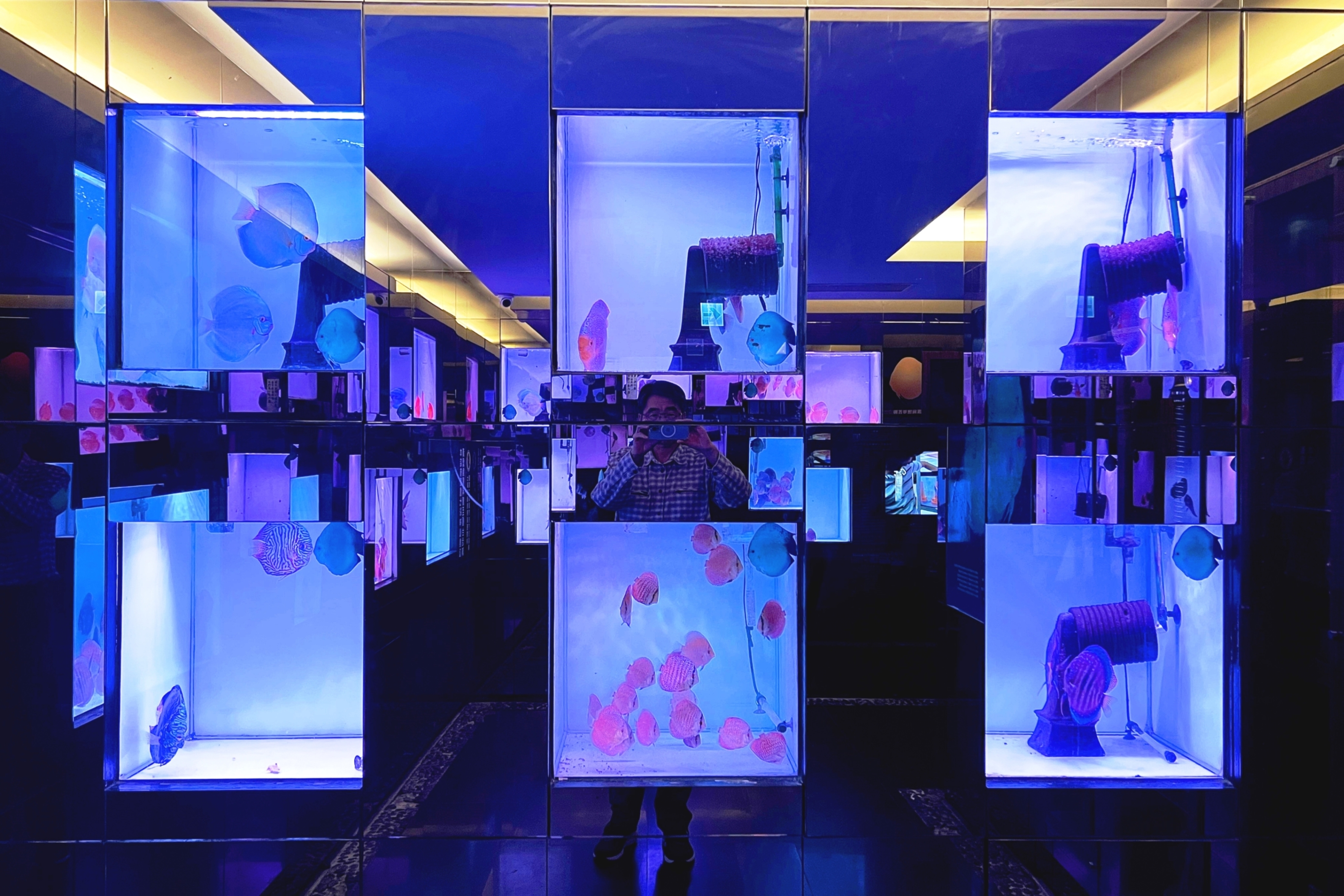
(英譯) The Dance of the Discus

#2025-0327

This is an English translation of my previous post "七彩神仙魚," which I'd like to share with my English-speaking readers:

= = =

The Dance of the Discus

Their name: Symphysodon.
Most simply call them discus.

Before me, they glide—
silent, slow, effortless.
Drifting forward, drifting back,
moving to a rhythm only they understand.
Serene. Untroubled. Completely free.

Ah! Today, for the first time,
I truly see them.
Not just with my eyes,
but with my heart.


A note for curious minds—
Discus is not discuss.
In sports, a discus thrower hurls a weight across a field.
But these discus—
they are weightless,
spinning only in water,
never through the air.

Lunch with family, a place called "Rén Bĕn Zì Rán"*
and there they were,
swimming like brushstrokes on liquid canvas.
Only now do I begin to understand them.

How I adore their beauty—
not bold like the koi,
but delicate, ethereal,
quiet poetry in motion.

🐟 🐟 🐟 🐟 🐟 (see photos)

= = =
* 人本自然 (pronounced "Rén Bĕn Zì Rán" and literally meaning "Humanity and Nature") is the name of the restaurant where I saw the discus fish for the first time yesterday. Jean, my two sisters (Xiuzhi and Xiuqing), and I returned to this delightful restaurant for lunch on March 26th, the day before Jean's birthday.

= = =
相關文章 (See also):
1)  七彩神仙魚 (盤麗魚屬)     (2025)


2024年12月31日 星期二

(中譯版) 人本自然~Chatting during Lunch!

#2024-1231

This is a Chinese translation of my previous post

= = =
人本自然
~~主題餐廳~~

這家餐廳,我以前曾來過,但這次只有我的妻子琴和二妹卿陪伴。我們午餐時閒聊,談及年少時的「苦日子」,回想起許多塵封的往事。

多年前,我和卿離開了故鄉,後來各自成家立業。父母則因年邁而無法繼續務農,最終於 2015 年和 2020 年相繼辭世。說實話,我們至今仍然深深思念著他們。

從我們搬離故鄉「國姓」算起,將近半個世紀了,然而,我與卿還是有許多話題可以分享。成長於同一個家庭,讓我們經歷了相似的艱辛與歡樂。今天,我們坐在「人本自然」的餐桌旁,暢談著孩童時的記憶與求學時代的故事,言語間自然流露了一種難以言喻的親切。

其中一段回憶,尤其深刻。卿提起了一件我幾乎遺忘的事,她說我曾力勸她繼續留在國姓國中求學。

當年,我們家境拮据,父母無法負擔所有孩子的學費。在那個年代,初中與高中大致分設於不同地點,兩者合稱中學,就相當於現今的七到十二年級教育。

我向卿提及,我是多麼感激我的音樂老師—洪江河先生。他在長流國小教音樂,也教過她。有一天午後,洪老師專程「家訪」步行上山來到我們家,說服父親讓我繼續讀初中。

「若不是他那天來找爸爸,」我說,「我小學畢業大概就得留在家裡,幫忙種田,或上山做工了。」

「哥,你記得嗎?當年,為了讓我去國姓國中讀書,你是多麼堅持啊!」卿開始講述當年的故事。

那是她念國中第二個學期,正要註冊的日子。學校分三天註冊:第一天是一年級註冊,第二、三天,分別是二年級、三年級註冊。父親因為手頭拮据,第一天無法湊足錢讓卿註冊。直到第二天早上,他才借到所需的錢。然而,卿因為體恤家中的經濟困難,決定不再回學校。

她回憶起,我當時如何盡心竭力,勸說她去註冊。那天早上,當一輛稀有的巴士來到這偏遠的村莊時,她遲疑著是否要上車。我催促她跟我一起上車。她上了車,但很快又跳下車來,只剩下我獨自乘車前往國姓國中,幫她完成了註冊手續。

我比卿大四歲,那時,正是我從嘉義師專回家來放寒假的期間。嘉義師專,就像軍校一樣,是政府全額資助的學校:學費、食宿、衣物、書籍全由公費提供。我一直感謝上帝給了我這個珍貴的機會。當年,父親之所以允許我報考嘉義師專,正因為那是公費學校。如果我沒考上,恐怕也只能留在家裡務農,或者更確切地說,當一名「鄉下小農夫」。

至於卿,她從國姓國中畢業後,就跟隨姊姊(我大妹)的腳步,進入一家工廠工作。事實上,我和三個弟弟、四個妹妹,都在十來歲便離開國姓,到外地另謀出路。除了我唸公費學校外,弟妹們若不是進入職場,努力工作賺錢,便是半工半讀,白天工作,晚上唸夜校之類。在當時的國姓,想找到一份好工作實屬不易。

歲月如梭。如今,我已七十歲,琴和卿也都六十幾了。我們有說不完的故事,所以在「人本自然」午餐時,我們聊得格外起勁,不亦樂乎。

在這之前,琴就聽過我和弟妹的一些童年往事。她也出身於普通家庭,因而對我們年少時的窘境,頗有同感。隨著時間的推移,我們三人彼此間早就相知相惜了,這深厚的情誼,讓我們成為眾多親屬中,關係最為親近的人。

(全文完)

= = =
相關文章 (See also):
2)  First Part of My Family Tale     (2010; originally, 2001)


2024年11月10日 星期日

A Chapter Beyond the Building

#2024-1110

This is an English translation of a story I wrote and published exactly 50 years ago. The original title, "樓外一章," translates literally to "A Chapter Beyond the Building."

= = =


You set down your pen and notebook, slip out of Dorm Room 703 like a ghost, and start climbing the stairs toward the rooftop, where clothes hang drying in the sun.

“Maybe a shower first,” you mutter to yourself. “These heaps of English vocabulary words in Selected Readings are driving me mad!”

“Oh! What a beautiful sunset!” you exclaim, reaching the rooftop. Your gaze immediately catches the golden sunlight illuminating the fluttering "flags of the world." Outside this building, everything seems alive, vibrant, unexpectedly beautiful. You can’t help but feel a quiet thrill.

“Yes, it’s been so long since I last watched sunset. A view like this deserves to be savored.”

Instead of heading to the drying area, you walk straight to the edge of the rooftop. Leaning over the concrete railing, you let your eyes race across the horizon, sweeping from one edge of the sky to the other.

The evening breeze is cool yet passionately embraces your face and hair.

From this rooftop, your view stretches so far. Below lies a gray, weathered wall, battered by years of wind, rain, and sun. Beyond it, a narrow railroad snakes toward Alishan. Across the tracks stands an unfinished building. In the distance, vast green fields are dotted with a few scattered thatched cottages... And farther still, the faint silhouette of a low-lying mountain ridge—so low it nearly sinks beneath the horizon…

Everything looks different now! You sense keenly that these things aren’t the same as they once were. “But if you asked me to describe how, I don’t think I could,” you muse. As you lift your gaze, you find the sky teeming with clouds, each one adorned by the setting sun in a vivid array of colors.

“It’s not the sky I remember anymore—not pale and washed out like before.”

Lowering your head, your gaze falls again upon the narrow railway leading to Alishan. Some fellow once remarked, “Five years in Chiayi, and not a single trip to Alishan. What a shame!” You agreed at the time, but looking back now, the thought amuses you. Lately, you’ve hardly felt like even stepping outside this building. Talk of climbing Alishan? A joke!

The railroad stretches endlessly in both directions, disappearing into the unknown.

“Maybe it’s a metaphor for life…” The words slip out as you begin reflecting on that period when you were trapped within yourself, held captive by regrets you still don’t fully understand. How did you become so utterly “one of the building’s own,” so filled with suspicion, frustration, and misunderstanding of the outside world?

“Ridiculous!” you remember that gloomy time. “Why on earth did I start seeing utility poles as relics and eucalyptus trees as symbols of weariness? Why was I so negative? Absurd! Absolutely shameful!”

If only you could kick that memory away, grind it into dust and fling it far from yourself.

Then you suddenly recall the letter she sent you from the “City of Culture,” along with that article, Recipe—All Your Wishes Fulfilled. Indeed, she wrote, “As it says in Recipe—All Your Wishes Fulfilled: ‘…to sweeten our lives, we need to add a teaspoon of good cheer, a dash of humor, a pinch of whimsy, a generous sprinkling of play, and a full cup of joy…’”

She’s such an optimistic girl. Her article, Recipe—All Your Wishes Fulfilled, was supposedly copied from The Standard. Her positivity only highlights how different you are. But lately, you’ve learned a thing or two as well. You’ve learned to cultivate a cheerful state of mind and a more motivated spirit.

“I’m someone who has a little building but can still step out whenever I please,” you declare inwardly. Charging toward the sunset, which is now fading from gold to red, you glance back and see the “flags of the world” still fluttering.

Looking at those “flags,” you remember you actually came up here to collect your clothes. But another, gentler name flashes through your mind: “Hall of Perfect Goodness.” Ah, yes—this dormitory you stand on is called “The Hall of Perfect Goodness.” That’s meant to signify reaching the highest state of perfection. Yet, to truly reach that ideal, wouldn’t you need to step beyond the confines of this building? Now you see it more clearly: beyond the building, there are rivers, woods, all the beauty of nature.

“When I’m trapped inside this building, my view of the outside world is narrow. With only those few small windows, what could I really see?… Either I mistake utility poles and eucalyptus trees for emblems of antiquity and fatigue, or I misinterpret the sunlight as 'an unattainable beauty.' How pitiful!”

Truthfully, this longing to go beyond the building isn’t new to you. Back then, didn’t you dream of breaking free, shaking off your worries?—You’d long wanted to open yourself up, to reach out to some truly great minds. You used to feel ashamed of your limited knowledge, so several times you went out and bought stacks of books—novels, essays, biographies—many of them translations, hoping to grow and enrich yourself through them.

And for those great musicians, artists, even the renowned writers of this age, you wanted to know each name, to understand each one, and remember them all. Names like the musical prodigy Mozart, the poet of the piano Chopin, the pioneer of German Romantic opera Weber… the Renaissance masters, and all the classics, the Romantics, the Realists, the Impressionists… and movements like Dadaism, Surrealism, and so on.

“Oh, how absurd!” you laugh to yourself, remembering how during that time, maybe out of curiosity, maybe out of vanity, you spent days and nights studying famous paintings, listening to famous compositions, reading famous works. You thought this could free you from your “narrow building” and make you noble. But it didn’t.

“Of course, it’s only natural,” you reason with yourself. “For someone confined within a building to sense the vastness of the world outside, it’s inevitable they’d feel small. So who can blame me for becoming utterly ‘one of the building’s own,’ lamenting my confinement day after day?”

“Though, perhaps that’s not entirely true…”

Lost in thought, you remember another amusing incident. Your old classmate Zhen once wrote, “Among our little group of ‘characters,’ you’re definitely the most mysterious. Teacher Liao even said you’re the most mysterious, and have the deepest ‘wisdom’…” Zhen also mentioned he’d recently seen an article you’d written in the paper and felt a rush of excitement; he was deeply moved by it. But he lamented how he seldom reads newspapers or magazines in his “own little world,” or he might’ve shared more of your joys and sorrows!

Only heaven knows how many times you’ve submitted pieces for publication. To put it nicely: you lack that cheerful, bold demeanor that allows you to openly reveal yourself to others. To put it bluntly: there’s always an invisible wall between you and other people. Ah!

“But there’s nothing to be done. I could never be a writer. Writing just doesn’t suit me. Coming from a family of generations of farmers, I feel like I’ll always be one of Shennong’s children…”

“What nonsense! Bah!” You suddenly resist, defying yourself. You have such a knack for rationalizing everything about yourself. It’s truly your greatest flaw. You need to shake off this ridiculous thinking as soon as possible. Not only that, you ought to step out of this narrow building again, and search far and wide for your passions!

Yes! You’ve already started making progress. Just the other night, you “volunteered” to attend a performance of German Opera at the Provincial Chiayi High School.

“Without translation,” you’d told yourself before setting out, “the opera is so hard for me to understand, but I want to expand my horizons. I’ll rely on the actors’ expressions to capture something, to glimpse the beauty and truth of the world beyond!”

And so you joined the crowd. You shyly called this experience “a blind man watching an opera”; yet in reality, you were less clumsy than you imagined, and The Marriage of Figaro and Der Freischütz [NOTE] truly moved this child of Shennong deeply. Ah! Especially during Der Freischütz, when Max ventures to Wolf’s Glen at midnight to forge magic bullets, you were completely entranced. In the future, when you return to your home in the mountains, facing towering cliffs and wild forests, these “images” will bring you new, mysterious fantasies!

Oh, home, beyond those distant mountains! As you gaze into the fading light, you can barely make out the outline of the hills—their peaks almost swallowed by the horizon. The horizon has already devoured half the sun. “Maybe it’s time for that shower now,” you say, as if waking from a dream, turning toward the drying area. By now, the “flags of the world” are no longer fluttering as before.

= = =
NOTE: To celebrate the German Opera Film Festival, recordings of these two operas were screened at the Provincial Chiayi High School auditorium on the night of March 14, 1974, free to the public.

= = =
相關文章 (See also):
1)  褲子及其他     (2010; orginally, 1974)
2)  樓外一章     (2010; originally, 1974)
3)  愛是什麼     (2010; originally, 1974)
4)  有感     (2010; originally, 1975)
5)  OO     (2010; orginally, 1985)


2024年11月4日 星期一

A Translation of "Chen Si"

#2024-1104

(For the original version in Chinese, see #2024-1101A.) -- Here's a translation of "Chén Sī":

Title: 晨思 (Morning Meditation)

With my eyes tightly shut, I shouldn’t see anything at all—yet somehow, it feels like I can see everything.

It’s as if everything is vividly before me! In the dream, I can barely tell if I'm inside it or observing it from outside...

When my mother starts talking, she rarely stops; that’s just her way. She’s uncomfortable with silence when people gather.

At this moment, I wasn’t even listening to what she was saying.

Her voice was soft, but I could see her excitement as she chatted with a group of strangers, who seemed captivated by her stories and earnest gestures.

Nearby, some young women who looked like college students seemed annoyed by her talkativeness. One of them, visibly displeased, turned to my mother and said, “Ma’am, could you lower your voice in public?"

Oh, was she bothering them? I decided to step in and handle the awkward situation.

At that moment, I, too, was distracted by a background noise—a noise that had been there since I’d first closed my eyes.

The irritating sound was like that of a stormy night, with the wind rattling against the large windows.

I opened my eyes and looked at the young woman who had spoken to my mother. Beside her were two or three others, like a close-knit group of friends, quietly backing her with their expressions and gestures.

I walked over and said politely, “Sorry about that! That’s my mom. She’s quite old and just loves to chat—she means no harm.” Then I leaned in and whispered in English, “She’s so old; she’s in the final stage of her life now."

I hoped they’d understand. I wanted them to sympathize or empathize with her, not to hold a grudge against an elderly woman for being a bit loud.

Sure enough, the young women quickly softened. They seemed to assume my mother had some incurable illness, and their eyes filled with a mix of confusion and pity, unsure how to respond.

Seizing the moment, I added, “Believe it or not, I’m already seventy—seventy-one in traditional age!

The awkwardness melted away, and I woke up from my dream.

It was all just a dream! As I awoke, I realized that the storm continued to howl outside the bedroom window. Typhoon Kong-rei was passing by, and according to last night’s weather forecast, it should have already moved out to sea. So, what’s going on? Is Taiwan still within the storm’s grasp?

My phone displayed [2:36]. It was just past two-thirty in the morning, and the noise had woken me up.

For a moment, I thought of my parents, both of whom have passed away. My mother left in 2020, and my father in 2015.

Though the bedroom light was off, the dim hallway light outside filtered in through the glass panel above the door, casting a soft yellow glow on the slippers at the foot of the bed.

I could also see my “sleeping partner” on the other side of the joined bed.

She’s told me several times that, if she wakes up at night and sees me beside her, sleeping peacefully, she feels a deep sense of reassurance.

“But, if there ever comes a day…” she often adds, “when I wake up and don’t see you there, I really wouldn’t know what to do…"

Thank God! We’re still here, together, sharing our lives.

Beyond being each other’s confidants, we also keep close family in our thoughts, those we care about most. Our “inner circle” includes her elderly mother (my mother-in-law), our son, daughter-in-law, and grandchildren. Of course, the bonds with our own brothers and sisters are also significant.

As for friends, I don’t have many—and to explain a bit humorously, I’m not into politics, I’m not in business, and I don’t invest much in social networking. So, I don’t cultivate many friendships and avoid superficial ones.

Though few in number, any “good friends” or “close friends” I have are genuine, kind-hearted, and wise companions.

Beyond these cherished friends, I’ve also benefited from mentors who were not only skilled but also of great character. Their names are imprinted in my heart, never to be erased!

My family itself is large—dozens, almost a hundred members when including each “branch” with children, grandchildren, and in-laws. Staying in touch, learning from each other, and offering mutual blessings strengthens our bonds. What greater joy could there be? Loneliness is out of the question.

So many dear family members and friends come to mind—those who have passed and those still with us, near or far—all deserving of our quiet prayers.

Especially on such a restless typhoon day (or night!), I must cherish and use this "awakening hour" for a spiritual and meaningful Morning Meditation. Amen.

= = =
相關文章 (See also):
1)  晨思 (Morning Meditation)     (2024)


(2024 康瑞颱風 路徑圖 from Wikipedia Chinese)


2024年5月7日 星期二

"Under the Apricot Tree" by Lu Yao

#2024-0507

短篇小說欣賞
《杏樹下》 by 路遙

Here's a new translation of the short story "Under the Apricot Tree" by Lu Yao, a Chinese novelist born in Qingjian County, Shaanxi Province in 1949.

= = =
(以下英譯是我從 YouTube 找到的四個朗讀版本,擇一而譯;相對而言,此版本比較 "精簡" 些,省略了兩處與 "主情節" 關聯性不強的段落,反而更有 "棄蕪存菁" 的美感!)

In April, the pale pink apricot blossoms had already withered. Hidden among the green leaves, the fuzzy green apricots shyly watched the middle-aged man, evoking a sense of familiarity.

He stood under the apricot tree, quietly letting his arms hang, gazing affectionately at the robust fruit tree. The countryside breeze carried the warmth of spring, gently caressing him. It mingled with the few strands of silver in his messy hair, stroking his cheeks and touching his heart.

Apricot tree, you should recognize me. Even though we've been apart for many years, I've never forgotten you. Whenever I see poplar trees, willows, pine trees... I think of you, apricot tree; I think of her, Xiaoping; I think of our childhood. But back then, you were small, and we were small too...

Yes, he was only eleven at the time, attending third grade in the village's elementary school. She was only fourteen, having started school late, in fourth grade.

Initially, they were strangers. One family lived in the east of the village, the other in the west, and the village was too large for them to cross paths. Despite living in the same village, children's worlds were always so small. Even at school, separated by different grades and genders, they had never exchanged a word. At that age, the boundaries between boys and girls were clear. They often lived in their own worlds, not interacting or intruding upon each other.

However, their lack of familiarity extended beyond these factors. At that time, the school also had collective activities and games, regardless of grade, size, or gender... Their unfamiliarity was determined by the living conditions of their two families. His family of five or six struggled to make ends meet with only his father working, barely scraping by. Needless to say, he was the poorest-dressed student in the school. But Xiaoping? Although her mother also lived in the countryside, her father was a doctor in the county town, and she was their only darling, often dressed like a little princess. She was undoubtedly the most distinguished student in the school.

They were at opposite ends. Although he was only eleven at the time, he already felt embarrassed by his shabbiness. So he always deliberately avoided those schoolmates who dressed decently, especially avoiding Xiaoping. In his eyes, she was probably always laughing at him. Others avoided him too; even those schoolmates from less affluent families tried to avoid him as much as possible, to prove they were a cut above him. He often found himself alone...

The scariest thing in the world is loneliness, especially for children. A lonely adult can create a world within their own mind to seek comfort, but for a lonely child, when there's a barrier between them and the outside world, their soul is left with nothing but a bitter and salty alkaline solution.

But, on that day, under that apricot tree, something happened...

He remembered clearly, it was also a day in April, the spring breeze caressing his rough little cheeks, soothing his sorrowful heart, just like today. He leaned against the trunk of the apricot tree, watching his schoolmates play the game of "finding friends." This was probably the annual spring outing for the rural school, the teachers bringing all the students to the countryside to play, sing, dance, and shout...

His schoolmates were having so much fun, but he dared not move from leaning against the tree trunk. No one knew why he didn't join in the fun. He couldn't even articulate the reason why he didn't join in.

The teacher approached, surprised, and asked him, "Why aren't you playing?"

"I... my stomach hurts."

"Is it severe?"

"No, not severe..."

"Then why don't you go home now?"

"No, no, I'll wait a while longer..."

He couldn't leave at that moment. He could only stand there, his back pressed against the tree trunk. This apricot tree was like a lifesaver to him.

Even when it was time for everyone to return to school, he remained standing there.

The whistle for assembly sounded, and his schoolmates lined up in four columns.

He still didn't move.

The teacher came over again, a little annoyed, "Aren't you leaving?"

"I..."

The teacher grew impatient, "Why are you still standing here?"

He had no answer.

His schoolmates all looked at him, gossiping and murmuring among themselves.

"Are you coming back?" the teacher asked, annoyed.

"I'm not going back now..."

"Why not?"

He burst into tears.

The teacher helplessly said to Wang Xiaoping in the group, "Wang Xiaoping, stay here, bring him back later..."

Xiaoping was a senior student, dignified and sensible. The teacher often assigned her to do "tasks" that were seen as significant by the students.

Now, beneath the apricot tree, only he and she remained.

"What's wrong?" she asked.

He dared not look at her, nor did he answer.

She approached him, boldly touching his sweaty forehead to see if he had a fever.

He felt his forehead burn like it was touched by a hot iron.

Turning his head away, not looking at her, he said, "I'm not sick."

"You said your stomach hurt?"

"It doesn't hurt."

"Then what's wrong? Can you tell me?"

Her tone was like that of an older sister.

He hesitated for a moment and said, "But you can't tell anyone."

"I promise I won't."

"What if you do?"

"Then I'll be a puppy."

"...My pants... are torn."

"Where are they torn?"

"In the back..."

"Ah, that's why you're not playing! Let me see."

"No."

"What are you afraid of! I have a needle and thread. I'll sew it for you."

"No."

Regardless of his agreement, she had already taken out a small needle and thread from her pocket and clumsily threaded the needle. He immediately became as nervous as if a doctor were about to give him an injection.

"Turn around!" she commanded.

He didn't move.

She walked over and forcefully turned him around. He immediately leaned against the apricot tree trunk, crying.

Without saying a word, Xiaoping began to sew the tear in the back of his pants. Occasionally, the needle pricked his buttocks, causing him to wince in pain, but she just chuckled from behind, saying, "Almost done..."

After fiddling for a long time, she finally finished sewing.

She looked up at the green apricots on the tree and said, "The fuzzy apricots are the best, sour and sweet... Shall we go back to school now?" she said to him.

"I'm not going back yet. You go first!"

She smiled at him and left. Not far away, she turned back and reminded him, "Come back soon!"

She left, disappearing on the small dirt road down the mountain.

He lifted his head and looked at the fuzzy green apricots among the leaves.

Although he wasn't very good at climbing trees, he struggled to climb this apricot tree.

He barely made it up, just picked an apricot, but because his footing wasn't stable, he fell from the tree.

He sat on the ground, hearing a "sizzle" from behind. Oh no, the pants she just sewed were torn again!

Tears once again filled his eyes. What saddened him this time was that he couldn't deliver this apricot into Xiaoping's hands. It was to repay her that he took the risk of climbing the tree. Now, he finally picked an apricot, but at the cost of his pants being torn again...

He sat on the ground dumbfounded for a while, determined to give her this apricot.

So, he braved it down from the mountain, to the small river by the school gate.

He saw his schoolmates cleaning up the yard, and he didn't dare to approach.

At this moment, Xiaoping came out of the classroom to dump the trash. She saw him and shouted, "Come back soon!"

He didn't move.

She stood there for a moment, seeing him like this, then walked down the small path from the school gate.

She stood in front of him and asked, "Why aren't you going back?"

"Here!" He handed the apricot to her. Although it was a bit dirty from his sweaty hands, Xiaoping still took it with surprise, tossing it into her mouth. As she ate, she said, "So delicious, sour... Let's go back..."

"I'm going home..."

"School isn't over yet!"

"My pants tore again..." he said, turning his head and running away, not forgetting to cover his unfortunate buttocks with one hand...

From then on, a kind of "inharmonious" friendship developed between him and Xiaoping—a friendship between a wealthy girl and a poor boy.

A year later, Xiaoping suddenly left the village. Not just her, her whole family moved away. It was said that her father signed up to support Tibet and went to work in a place called Shigatse.

Since then, he had never seen her again.

Many years passed, and now he stood under this apricot tree, looking at the fuzzy green apricots among the leaves, tears unknowingly streaming down his face. For the joy and sorrow that had passed, for the bittersweet memories, he smiled and cried. At this moment, he seemed to hear the joyful, childish singing again: "Finding friends, finding friends!..."

He wiped away his tears with his hand, then, like when he was a child, clumsily climbed the apricot tree. He picked a green apricot, then jumped down from the tree.

He threw the apricot into his mouth, savoring the sour taste, then bid farewell to the apricot tree and descended the mountain. The April breeze gently caressed his hair, mingling with a few strands of silver, caressed his tear-stained cheeks, caressed his childlike heart...

(全文完)

= = =
相關文章 (See also):
1)  "The Cracked Vase" by Liang Xiaosheng     (Trans. in 2024)
2)  The Covenant Renewed     (2009, 2010, and 2012)


2024年5月3日 星期五

"The Cracked Vase" by Liang Xiaosheng

#2024-0503

短篇小說欣賞
《有裂紋的花瓶》 by 梁曉聲

Here's a new translation of the short story "The Cracked Vase" by Liang Xiaosheng, a Chinese novelist and screenwriter born in Harbin, Heilongjiang in 1949.

= = =
(以下英譯為 初譯稿, 有關 "男主人" "女主人" 等語詞, 有待斟酌; 可進一步修訂!)

This is an ordinary vase. Deep blue, with a curled mouth, slender neck, widening at the top and narrowing down, the most traditional style. It’s a relic of the past. There are no patterns. Apart from the all-over blue, there are no other embellishments.

Nowadays, it's rare to come across such a common vase. Just like it's hard to find "Liberation" brand rubber shoes; hard to find clothes made of plain or twill fabric; hard to find a large rough porcelain bowl.

Times phase out certain things, just like autumn winds blowing leaves from the branches.

But this incredibly ordinary vase has had the privilege of being a gift to congratulate newlyweds on many occasions.

The first recipients were a couple from the late 1960s.

It was priced at only a couple of yuan* back then. [Mookoo’s Note: “Yuan,” written as 元 or 圓 in Chinese, is the basic unit of currency.]

The person who gave it felt that using it as a wedding gift was a bit "insufficient," so they added an extra five yuan. Five yuan was quite a bit of "gift money" back then. So, in reality, it was more like a companion gift worth five yuan.

This made the vase feel somewhat lost. Of course, it was quite unwilling to be a five-yuan companion gift.

Luckily, the young couple liked it. In late 1960s China, even urban households mostly didn't have vases. They were young intellectuals with a particularly simple new home. Apart from an old double bed, there wasn't even a table. Two old wooden crates were placed side by side, serving as a table. The couple covered it with a piece of plastic and placed the vase in the middle. Next to the vase was a small alarm clock someone else had given them. The alarm clock, like the vase, was considered a "craft" that enhanced the aesthetics of their home. The hostess found a small piece of red fabric, folded it, and draped it over the alarm clock. It was May, and there was an old lilac tree in the yard, blooming with clusters of pale blue flowers. The husband cut a few clusters and placed them in the vase. The simple new home was thus filled with intoxicating fragrance.

At night, the vase and the alarm clock watched the endless affection between the newlyweds, deeply moved.

The vase said, "It’s nice to be human beings."

The alarm clock flashed its "cat eyes" on the dial and said, "Yes!"

The vase continued, "Love is really wonderful."

The alarm clock, feeling the same, murmured, "If the strings inside me were not so tightly set, I would rather my hands move much slower, so that this loving couple could spend a very long wedding night.”

At the moment, the husband held his wife’s face and kissed her, saying, “I love you!”

The wife also said, “I love you!”

When she said these words, her eyes sparkled.

The vase whispered to the alarm clock, “Did you hear that? I’m sure what they said is poetry!”

The alarm clock murmured in reply, "If such beautiful words are not poetry, then there is no poetry in the world.”

From that moment on, this ordinary vase, as ordinary as could be, acquired a spiritual connection with humanity.

Later came the "Cultural Revolution." Before the couple went to the countryside for re-education, they gave it as a gift to another newlywed couple. They felt odd giving it away on its own; they felt they should add some extra money. The wife said, "Let's add another five yuan."

The husband said, "That's not appropriate. It’s as if we're re-gifting something someone else gave us. Let's add ten yuan. Adding another five changes the nature of it."

So, then, the vase became a ten-yuan companion gift.

In the past, vases were actually surplus items in ordinary households. In most urban households, even if there were vases, there were no fresh flowers to put in them. For those who cared about home aesthetics, they could only buy paper flowers before the holidays. But paper flowers attracted dust, and once they got dusty, they couldn't be cleaned. Often, after the holidays, the dusty paper flowers were thrown away, and the vase became nothing more than a decoration.

Vases like this, surplus items, were perfect for being passed around as gifts, especially during holidays. In the past, the income of most Chinese people was pitifully low, so this was absolutely understandable. However, every time the vase was passed on, there was inevitably some money accompanying it. If the amount exceeded five yuan, the vase felt aggrieved because it seemed to be less valued. It didn't want to be a companion gift. If the amount was less than five yuan, the giver naturally felt awkward, but the vase was quite happy because it felt like it was the main focus.

And so, the vase was passed from one family to another...

From the day it became a vase, it had a growing desire, which became increasingly strong. That is, it longed for a bouquet of flowers that belonged to it. Even just a single flower would do!

This was the instinctive desire of the vase.

And so, this vase contracted a kind of sickness. We humans call that sickness unrequited love. The fragrance of lilacs lingered in its memory. It deeply regretted that when it had those few clusters of lilacs, it didn't quite understand love. It secretly swore that if it ever had another bouquet of flowers, or even just one flower, its fascination with flowers would be deeper than people's fascination with each other. It would say those poetic words — "I love you!" — a hundred times a day to its beloved.

After the 1980s, the living standards of Chinese families generally improved. This vase could no longer have the luck of being passed on as a wedding gift. Doing so would be looked down upon.

As a result, it became a surplus item in its last owner's home.

Even though it remembered so many human love stories...

One day, the wife picked it up and said, "The more I look at it, the uglier it gets. We should clean it or throw it away!"

The husband said, "Don't throw it away! At least it was a gift from someone else. If you really think it's ugly, put it on the windowsill!"

So, the vase lost even the privilege of being displayed in the house.

From then on, it was abandoned in a corner of the balcony...

When the husband was cleaning the balcony, he knocked the vase over. As a result, it got a crack, which was not long and therefore wasn't very noticeable. The crack was at the waist of the vase, making it prone to leaking.

"Alas, now it's completely useless!"

The man picked it up. He thought he might as well smash it. But then he changed his mind. The attachment to old objects played a role in his heart. He pushed open the balcony window and placed it inside the balcony railing.

This household now had a new vase. A beautiful crystal vase. The husband and wife had been married for twenty years, and their friends gave them this commemorative gift.

Fresh flowers were available everywhere now. The wife liked flowers. The crystal vase never lacked fresh flowers.

The cracked vase, from within the balcony railing, could see the crystal vase inside the house.

It envied the crystal vase greatly.

It mourned for its own flaws deeply.

Its longing for flowers was its longing for love!

From inside the balcony railing, it could also see all the windows of the building across. There were vases behind those windows. Vases from the 1990s, all so stylish and beautiful. All those vases it could see were filled with delightful fresh flowers.

It wished to possess a flower, no, it merely harbored the desire to possess a flower, and this desire grew stronger.

It was a desire tormented by envy and sorrow, unquenchable.

. . .

Then, one day, the woman brought home a bouquet of flowers. She plucked out the withered roses from the vase and discovered the budding flower stems. There was just one, too delicate, with buds too small. "It probably won't even bloom if I put it back in the vase," she thought.

She spotted the cracked vase on the balcony. "Here, take it, you useless thing!" she said, casually inserting the stem she thought would never bloom into the vase.

The cracked vase trembled with excitement.

"Oh, God, merciful God! I finally have a flower of my own! Now I can pour all my love into this little flower! Even though I'm ugly, even though I'm seen as worthless, I will prove to my beloved how tenderly and devotedly I can love..."

But it cried. Because it realized, after all, it was a vase without water!

Water!

It had witnessed people's wastefulness with water.

But it didn't have a drop of water.

Not a single drop, and it was scorched by the sun. It heard a whimper from its little flower as it was being scorched.

Even if it's just a little bit of water that's going to be poured out of the crystal vase, please give it to me!

But it watched helplessly as the woman went to change the water in the crystal vase...

After a while, the crystal vase was back in its place. A bouquet of white roses in the crystal vase, absorbing water, looked so fresh! As if every leaf and petal were oozing droplets of water.

But the cracked vase did not have a drop. It and its "little beloved" were only left to weep in despair.

Two or three hours later, its "little beloved" wilted...

At night, after its "little beloved" had fallen asleep, the cracked and abandoned vase prayed devoutly to God: "Merciful God, why do you grant me love but not the nourishment of love, water? Why do you grant me such a lovely little beloved but make me a sinner who hurts her? If you are truly merciful, then please send a heavy rain..."

The clouds gathered...

Lightning...

Thunder...

What a heavy rain!

The little flower was "awakened" by the rain.

The cracked vase was filled to the brim with water in the rain!

"Thank you for your prayers," said the flower.

The cracked vase said, "Now, I don't know if I'm worthy of your love, but I can say that sacred poem — my little beloved, I love you!"

The flower blushed and bowed its head.

The flower affectionately kissed the vase's lips for a long time...

But after all, the vase was cracked. When dawn broke, half the water in the vase was gone, and it was deeply worried.

The flower comforted it, "My beloved, cheer up! I have a way to mend your cracks!"

So the flower tried its best to secrete a liquid from its stem, and the liquid seeped into the cracks of the vase; the vase tried hard to tighten its body, making it easier for the flower's liquid to stick to its cracks.

This was very detrimental to the flower, because as it secreted liquid, it also lost nutrients. And this was very dangerous for the vase, because if it didn't control the force properly, it would be too easy for it to split in half due to excessive force.

But for their love, for loving each other, they were willing to endure any loss, to risk any danger.

The cracks were sealed.

The water no longer leaked out.

The flower gradually regained vitality, the leaves began to become lush, and the buds grew day by day.

The vase was intoxicated with its happiness. It told its "little beloved" countless times every day, "I love you!"; every day, it recounted its experiences to its "little beloved." To the flower, the experiences of the vase seemed so tortuous and legendary. When it spoke of sadness, the flower comforted it with kisses. Sometimes, the vase would despair, and the flower would proudly say to it, "My dear beloved, don't belittle yourself! You should understand how worthy you are of my love! Because your history gives you a different kind of spirit, a different kind of temperament! This is not something that can be brought to a vase by advanced materials and costs!"

Finally, one day, the bud completely bloomed!

A bright red rose, blooming so beautifully! So enchanting!

The vase spent the whole day happily whispering sweet words to its "little beloved" and singing passionate and romantic love songs. It couldn't finish speaking, couldn't sing enough; the flower, always so beautiful and enchanting, bloomed for six days.

In those six days, the vase felt infinite happiness, growing thicker and deeper with each passing day. In human terms, the vase was simply "overjoyed"!

On the morning of the seventh day, the master looked out at the balcony in surprise and said, "Hey, how come there's a flower blooming in that broken vase?"

The mistress answered as she dressed in front of the mirror, "It was thrown in a few days ago. Since it's blooming, take it out and put it in the crystal vase. Who can see it in that broken vase?"

So the master went out to the balcony.

"Farewell, my little beloved!" choked the cracked vase.

Looking at the master, the flower bowed its head and kissed the vase's lips, saying calmly, "No, my dear beloved, I only belong to you, cracked vase, because without you, I wouldn't bloom."

"My little beloved, leave me alone and go to the crystal vase! The bouquet of white roses will set you off even more beautifully!"

"If that's the case, I won't be able to kiss you again or hear the sweet words you say to me or the love songs you sing for me..."

The master reached out and took the cracked vase in his hand, wondering how it could hold water with cracks?

"How beautiful our love is! Darling, I appreciate you!" the flower sobbed.

The vase nodded gently, too sad to speak...

As the master's hand just pulled the flower out of the vase, the cracked vase suddenly split into pieces, the fragments splattered, and water spilled all over...

Almost simultaneously, the beautiful rose in the human's hand withered instantly, becoming completely bald.

Each of the bright red petals fell on those fragments of the vase.

In this way, they completed the last embrace, cuddle, and kiss of their lives.

"Love you!..."

"Love you!..."

— True love is without hesitation, filled with gratitude, and thus imbued with vows and poetic significance.

— Love born out of gratitude is not genuine; to love and be loved with gratitude makes the sentiment of love even deeper and more intense.

This sentiment is precious...

(全文完)

= = =
相關文章 (See aldo):
2)  "Under the Apricot Tree" by Lu Yao     (Trans. in 2024)


2022年8月4日 星期四

The Pine Garden 松園別館 (A)

#2022-0804A

Yesterday Jean and I came to St. Luke's Church in Hualien, where our son has just started a new ministry. Our plan is that we'll stay here until tomorrow and then return to Wufeng with our two grandchildren so that they can spend ten days or so in their hometown during the summer vacation.

This afternoon our son invited us out for a short visit to the Pine Garden (see photos), which is not far from St. Luke's Church. The following is my translation of Tingshuo Bai Hudie Huilai-guo,  especially made for you my English-peaking readers to read; I hope you'll enjoy reading this article.

聽說松園白蝴蝶回來過
It Is Said that White Butterflies
Have Returned to the Pine Garden

In the final stage of World War II, the front lines being so tense, many young people in Japan and its colonies (such as Taiwan and North Korea) responded to the call and joined the "Kamikaze Commando." They learned to fly, but not to land. They did sacrifice their precious lives to complete a suicide mission of no return.

The Japanese kamikaze team members stationed in Taiwan at that time were also known as "white butterflies." The white butterflies are free and unrestrained, dancing gracefully. From a distance, they look like cherry blossoms leaving their branches in late spring, swirling and dancing before they wither and fall. They, too, are like goose down snowflakes fluttering in the wind in a harsh winter; they don't really land until they've drifted down a long street.

Late at night, the night before leaving home, the door being ajar, the young man turned his back to his mother and packed his meager baggage. He took out the photo that had been packed and put it back on the table. Excited and passionate, he was sad for a while. "I'd better leave this photo to my mom as a souvenir," he thought. His mother turned her back to the faint yellow light and stood aside, watching the young man's firm back. She covered her mouth with a hand and wept, trying to swallow the cries of separation. She reached out and stroked her son's eyebrows, gently and carefully, for fear of hurting him. "If we can't meet again in this life, you must turn into a white butterfly and fly home anyway, to let your mother see you for the last time." After saying this, she burst into tears again, and the young man's chest felt hot and stuffy. As the days progressed, it was time for him to leave. He put on simple clothes, but he looked a bit solemn. When the plane took off, a pair of moist eyes reappeared in his mind, and he seemed to hear the lullaby his mother had hummed softly to him at night when he was a small boy. The tears welled up in his eyes, blurring his vision. And before losing weight on the plane, he dared not forget his mother's instructions. "Mom, I'm going back now."

On June 7, 1945, after the last special attack plane took off, the tragic history of the Taiwan Kamikaze came to an end. And yet traces of history still retain the shadows of the Kamikaze members' short lives. May those who yearn for peace not have to toss and turn; may those who care about their hometown not have to leave!

=     =     =
本頁照片上篇 / This is Part A

= = =
相關文章 (See also): The Pine Garden 松園別館 (B)